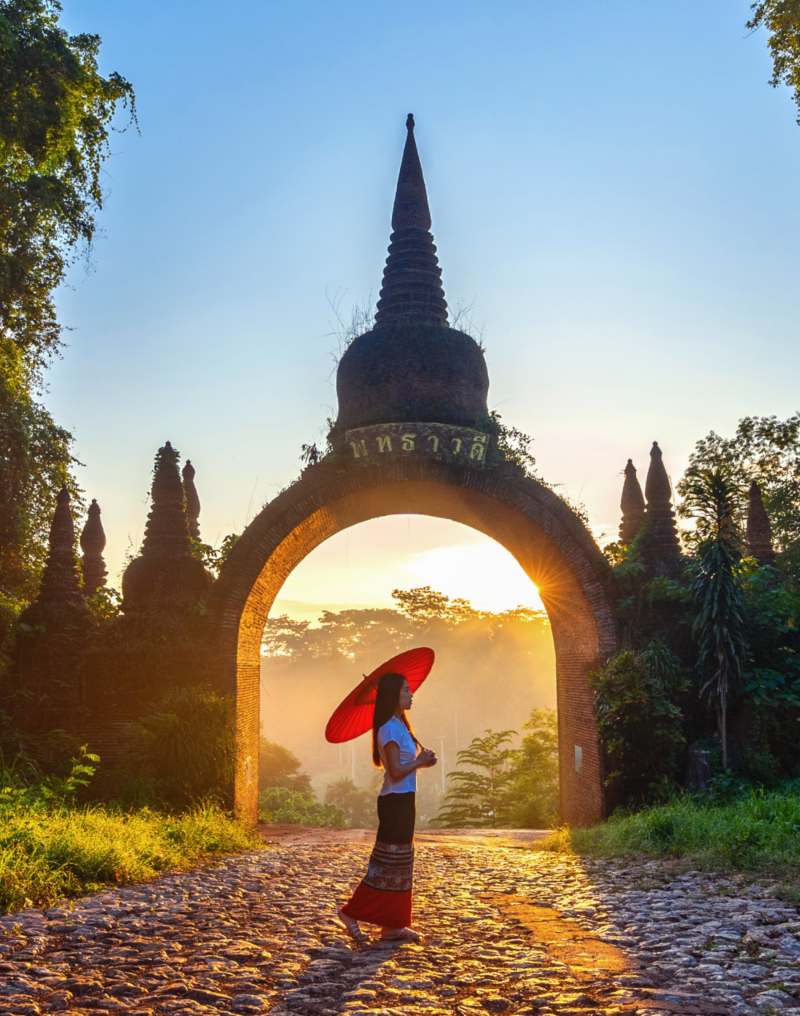
When most travelers think of Thailand, beaches and islands usually come first. From our experience, however, Thailand’s waterfalls often end up being one of the most memorable parts of a trip. Set deep in jungle landscapes, national parks, and mountain regions, waterfalls offer a slower, more immersive way to experience the country’s natural beauty. Some are easy to reach and perfect for families, while others are true adventures that reward effort with spectacular scenery. Below are the waterfalls we most often recommend to our clients, based on accessibility, scenery, and overall experience.
The best waterfalls in Thailand
Bua Tong “Sticky” Waterfall, Chiang Mai

Bua Tong Waterfall is one of the most unusual waterfall experiences in Thailand, and it’s always a favorite with our guests. Here, limestone rocks with a natural deposit allow you to literally climb directly up the waterfall. Hence its name, “Sticky” waterfall. The waterfall is under an hour and a half away from Chiang Mai, making it excellent for a half-day trip. There are four levels to the waterfall, labeled 1 to 4, which take about 15 minutes to climb. Bua Tong is very easy to access, making it a great nature day out for children and families.
We recommend you go barefoot, as it will allow for a more secure grip while you climb the waterfall. There is alsoa rope you can hold onto if you need assistance, however, the rocks are usually sticky enough for most people. You can also enjoy a nice swim here at the bottom of the waterfall.
The best time to visit Bua Tong is early morning, the weather will likely be nicer and it will be less crowded. Weekends are especially busy, so we recommend going on a weekday to avoid crowds.
Erawan Waterfall, Kanchanaburi
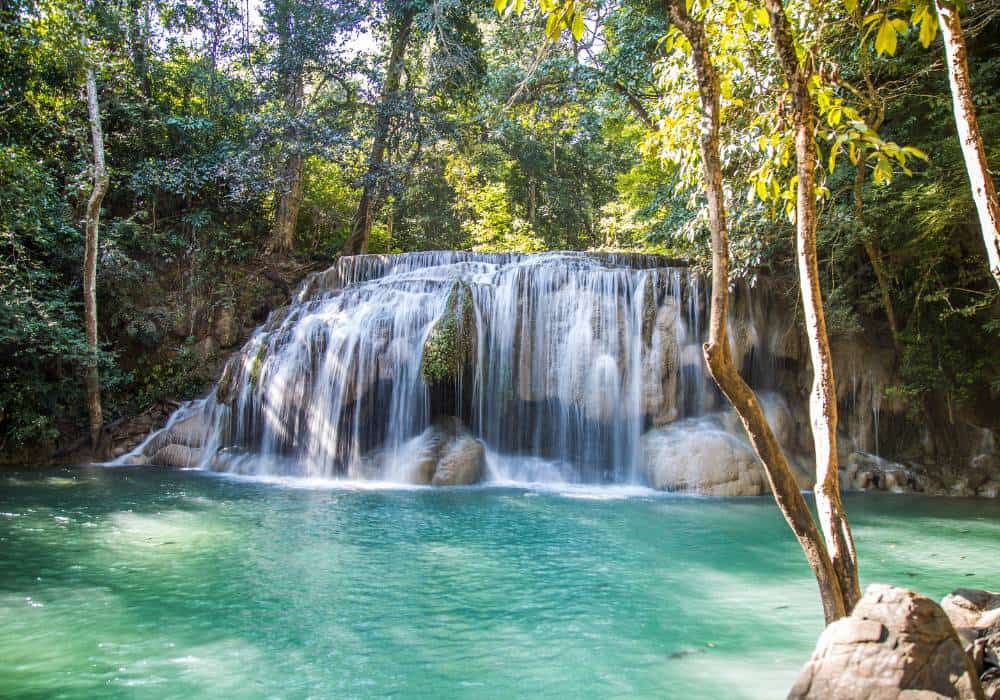
Erawan Waterfall is one of the most famous waterfalls in Thailand. This waterfall consists of seven tiers all with their own names, which you can climb from one level to another.
The lower levels are considered easy to climb but after the fourth level it becomes more of a hike. While not necessarily dangerous, it may not be the easiest if you have small children or mobility issues. Overall, the trail is easy to follow with lots of signs to give you directions. Lifejackets are available at entrance and there is a golf cart service to drop off visitors to the lower levels from the parking lot.
As rocks can be a bit slippery, trainers or walking shoes are recommended for this trip. Swimming is allowed in most tiers, and the third level is a particularly popular and well-loved spot for swimming. We recommend level five for a cool down in the shade. Level seven is where you will most likely get the water to yourself. Be aware of the fish, they might nibble on your feet but they are not dangerous. While the main attraction of the park are the waterfalls, there are also plenty of caves and temples that are worth exploring nearby.
There are also a number of restaurants and stalls right outside the park. We personally recommend the well-loved Baan Tonn Naam if you are looking for a refreshing and delicious meal after a day’s adventure.
We recommend visiting during the rainy season between July and October instead of the dry season as this is when some waterfalls dry out. This spot is a popular day trip, therefore it is best visited in the early morning, when it is less busy and crowded.
Thi Lo Su Waterfall, Um Phang Wildlife Sanctuary
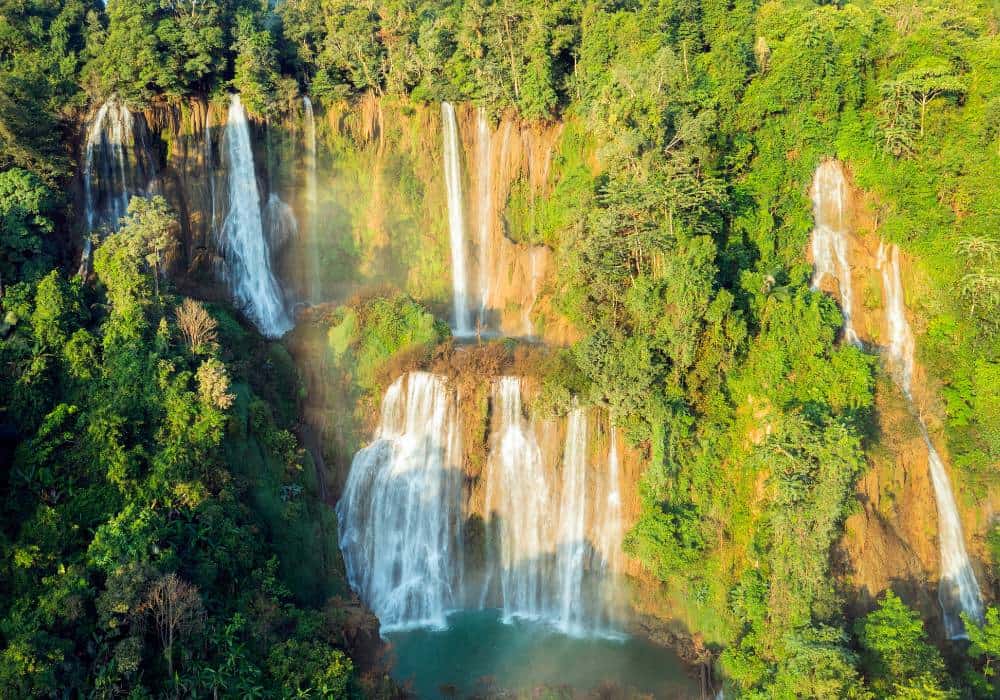
This is Thailand’s largest waterfall, it is 300 meters high and it consists of multiple-tiers and levels. Visiting this waterfall is for those looking for a serious challenge, we recommend this one for those truly looking for a Thai nature adventure. The most popular way to experience Thi Lo Su waterfall is usually by multi-day tour which consists of rafting, hiking, camping, and visits to villages nearby.
How to get there:
Thi Lo Su waterfall is not the easiest to reach, it is located in a very remote location in Um Phang Wildlife Sanctuary, located in the Tak province bordering Mynamar. You can get a flight from Bangkok or Chiang Mai to Mae Sot, and from there it is a 4-5 hour drive to reach the waterfall. You can also get there by boat from Mae Klong River in Um Phang district, then there is a 10km hike to Thi Lor Su Waterfall.
Access is limited during the rainy season to protect wildlife, and guided tours are often required. From our experience, this trip needs careful planning and advance booking, but for adventurous travelers, it is one of the most rewarding and exciting nature experiences in Thailand.
Haew Suwat Waterfall, Khao Yai National Park
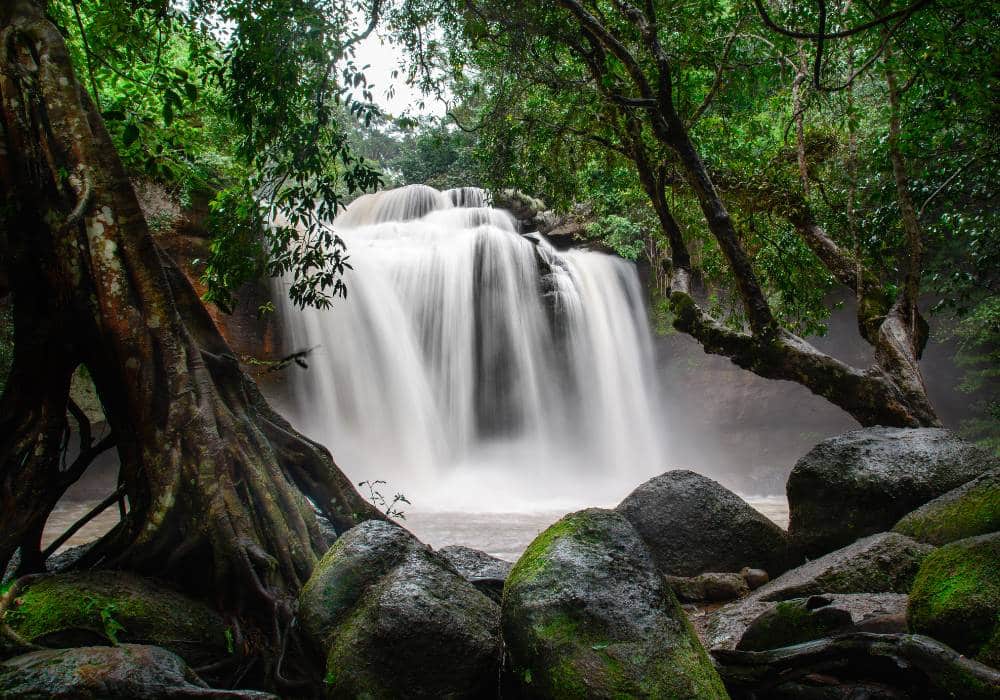
Made famous by its feature in the movie “The Beach”, this is a waterfall that we’ve noticed is quite recognisable to a number of visitors. We recommend visiting this waterfall alongside a Khao Yai nature day out. Khao Yai is one of the best national parks for spotting elephants and monkeys in Thailand and it is one we always recommend to our clients.
We always recommend Haew Suwat for those looking for an easy to reach waterfall. Getting here involves a stairway that is easy for most to climb, which is also suitable for small children. This makes Haew Suwat ideal for a family day out. The end can be quite steep and slippery though, so we recommend wearing a good pair of shoes
There is a restaurant by the waterfall that serves delicious Thai meals, it is the only one nearby so it is hard to miss. We recommend the prawn dishes in particular as they have been highly praised by visitors before. This restaurant also sells fruit, light snacks, and desserts if you are looking for something quick to eat.
We definitely recommend visiting this waterfall during the rainy season, as we have experienced during previous years that it can totally dry up during the dry season, or it might just be a bit more underwhelming.
Haew Narok Waterfall, Khao Yai National Park
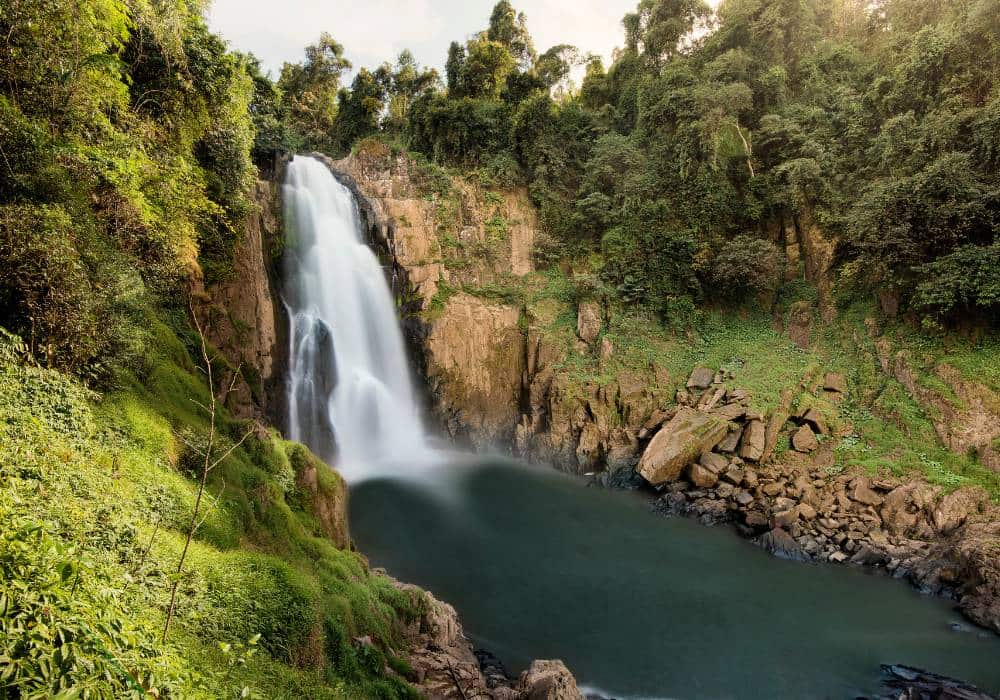
Haew Narok is the largest and tallest waterfall in Khao Yai, featuring three tiers set amidst lush jungle. Most of the trail is straightforward, but the final section is steep and uneven, making it unsuitable for young children or visitors with mobility issues. The uphill return can be challenging, so bring plenty of water and prepare for a little exertion.
The trail is excellent for spotting wildlife and observing the jungle up close. Walk slowly and pay attention to the vibrant flora, colorful butterflies, and birdsong. Midway along the path, you’ll notice tall concrete pillars topped with elephant statues, part of a fence built to prevent elephants from wandering too close to the falls. Information boards explain the meaning of “Haew Narok” — translating to “hell” in Thai — which references tragic stories of elephants falling from the cliffs, adding an important historical context to your visit.
We recommend you visit at the end of the rainy season, where you will see colorful, red, yellow, and orange champagne mushrooms lined all across the trail to the waterfall. This alone is an incredible sight for many. A raincoat or change of clothes is recommended, as the spray from the waterfall can reach the viewing platform even from a distance.
Haew Narok is normally closed for two months in August to allow wildlife to recover and may dry out during the dry season, so the best time to visit is at the end of the rainy season for full, powerful flows.
Na Muang Waterfall, Koh Samui

While Koh Samui is primarily known for its beaches, the island’s waterfalls are true hidden gems. They are a must-visit for those who want to explore Thailand’s waterfalls. There are two waterfalls here, both named Na Muang, and both located fairly close to each other.
Na Muang 1 is one of our favorites to recommend for an easily accessible waterfall, it is located right by the parking area. The easy walk makes it ideal for families, the elderly, and visitors with mobility concerns. It’s perfect for a relaxed day in nature while still enjoying the rainforest and cascading waters.
In our experience, Na Muang waterfall 2 tends to be more overlooked by tourists, although it ends up being a favorite for those who end up visiting it. Na Muang 2 is a more challenging, technical climb and better suited for adventurous travelers. The trail passes through dense jungle, on your hike to the waterfall, you may notice some beautiful unique plants and flowers you haven’t seen before, even in Thailand. Keep an eye out for vibrant orchids clinging to tree trunks and unusual fruit trees native to Koh Samui. A rope provides assistance on your walk, and proper footwear and mosquito repellent are essential.
The climb ends at a cascading waterfall with a natural infinity pool, ideal for swimming. Due to its difficulty, Na Muang 2 is far less crowded than the first waterfall. We recommend visiting early, around 8 am, to avoid the heat and enjoy a near-solitary swim. Visitors should also avoid elephant rides near the entrance and instead support ethical sanctuaries like Samui Elephant Sanctuary.
Sai Yok Waterfall, Kanchanaburi

Sai Yok waterfall, also known as Khao Phang is another sticky waterfall. This is one of our favourites for a calm, relaxed day out. Here, you can see many families and locals sitting nearby having a picnic, something we recommend doing at Sai Yok Waterfall. This is a great waterfall for families, children, and elderly visitors. The trail is easy to follow, with clear signs along the way.
This alongside it being an easily accessible waterfall makes Sai Yok Waterfall ideal for a family day out. We also recommend the coffee shop by the bridge for a laid-back stop and an excellent view of the area.
Beyond the waterfall itself, Sai Yok National Park offers plenty more to explore, including caves, wildlife spotting, and rafting along the Khwae Noi River. With food and snack stalls available around the park, it is easy to spend several hours here without rushing. As this is a popular day trip from Bangkok, we recommend visiting early in the morning to enjoy the area at its most peaceful.
FAQ
When is the best time to visit Thailand’s waterfalls?
We recommend the rainy season, from around May to November, as the best time to visit. The waters are at their fullest and most powerful, making for truly memorable views. The dry season, from November to February is better for hiking as the weather is typically better. When you decide to visit depends on what is more of a priority.
What should I wear?
Most waterfalls have hikes involved, so it is best to wear comfortable clothing and good shoes, like trainers.
Are there entrance fees?
National parks usually charge around 200–300 THB for adults and less for children.
Some waterfalls outside parks are free.
Are waterfalls wheelchair or stroller accessible?
Most waterfalls are not fully accessible due to uneven trails, stairs, and forest paths. We recommend Na Muang Waterfall one in Koh Samui, for an easy to access waterfall in Thailand.
Are there guided tours?
Yes, We operate half-day or full-day waterfall tours, often combined with hiking or nearby attractions, depending on the pick up location and visited waterfall.
Our tips
- Make sure to stick to marked paths, some trails can be dangerous if gone off path, as it can be quite slippery and rocky.
- Be aware of slippery rocks in and around waterfalls, considering wearing a good pair of water shoes for better grip.
- Do not interact or directly engage with any wildlife
- Most national parks have an entrance fee, make sure to carry enough cash with you
- Make sure to check opening and closing times ahead of time
- Always respect park rules
From easily accessible family-friendly spots like Na Muang 1 and Haew Suwat, to challenging adventures like Na Muang 2 and Thi Lo Su, there are waterfalls in Thailand to suit every type of traveler.
When planning a waterfall visit, consider accessibility, seasonality, and your group’s interests to make the most of your experience. Early morning visits are often best, both to enjoy cooler temperatures and to experience the waterfalls with fewer crowds
At Royal Vacation, we use our operational experience and local knowledge to help travelers select the most suitable waterfalls for their itinerary, ensuring a safe, enjoyable, and unforgettable nature adventure. Contact us today to plan your private tailor-made tour and experience Thailand’s waterfalls like a local.