Elephants are a highly valued animal in Thailand, they are the official national animal of Thailand and they have played a significant role in Thai history, culture, religion, and in the Thai tourist landscape. In Thailand, the elephant represents power, loyalty, and wisdom. Indeed, these large, friendly animals have become largely associated with Thailand, and are often one of the first things that tourists may think of when planning their travels there. In this guide, we will give you everything you need to know about elephants in Thailand, including the best elephant sanctuaries in Thailand, elephant watching in Thai national parks, how to know if an elephant camp is unethical, conservation efforts in place to protect these regal animals, and finally, the role of elephants in Thai history, culture, and religion.
Where to see elephants in Thailand
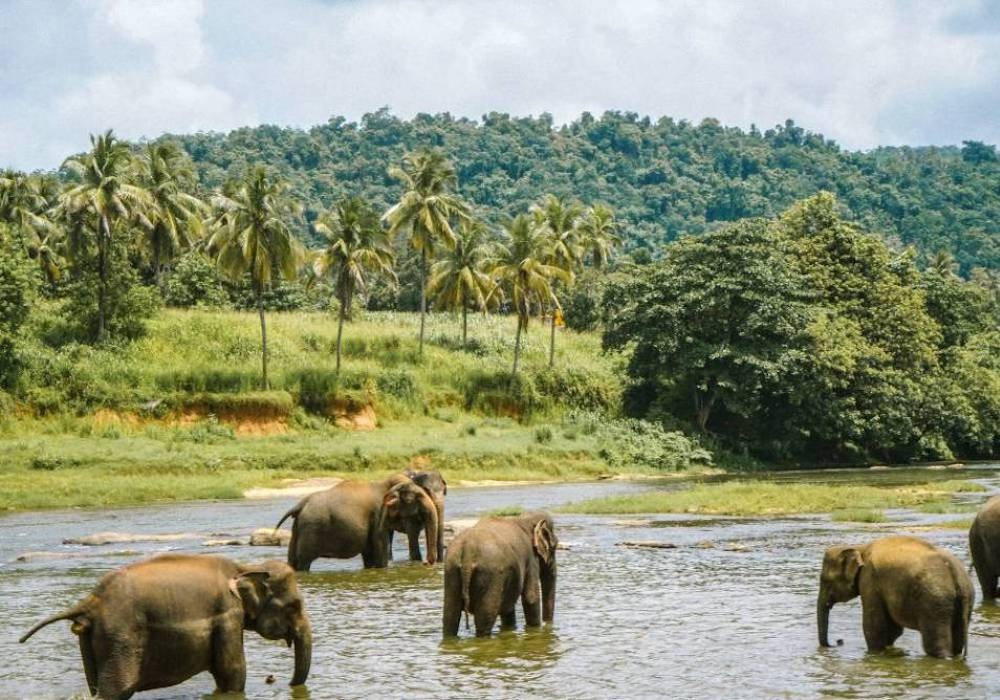
During your travels to Thailand, there are two main locations where you may go see elephants: elephant sanctuaries and national parks. An elephant sanctuary is a semi-natural environment where rescued elephants are rehabilitated after maltreatment, human exploitation, and injury. Ethical sanctuaries prioritize education, animal welfare, and conservation rather than entertainment. If you decide to go to a National park, you will be able to watch and witness elephants in their natural wild habitats.
There are around 30 elephant sanctuaries throughout Thailand, which can be found in almost all major tourist destinations in Thailand. At Royal Vacation, we’ve been arranging ethical elephant experiences across Thailand for years. One thing we consistently see is that travelers often assume all sanctuaries are the same — they’re not. In practice, the difference between ethical and unethical camps becomes obvious the moment you see how much freedom elephants are given…
When researching volunteering with elephants in Thailand, it’s important to choose organizations that do not allow riding or performances. Most of these sanctuaries offer day-trips, volunteering opportunities, and some even offer short-term stays. Below is an overview of some of the best elephant ethical sanctuaries in Thailand.
The best elephant sanctuaries in Thailand
Elephant Nature Park, Chiang Mai
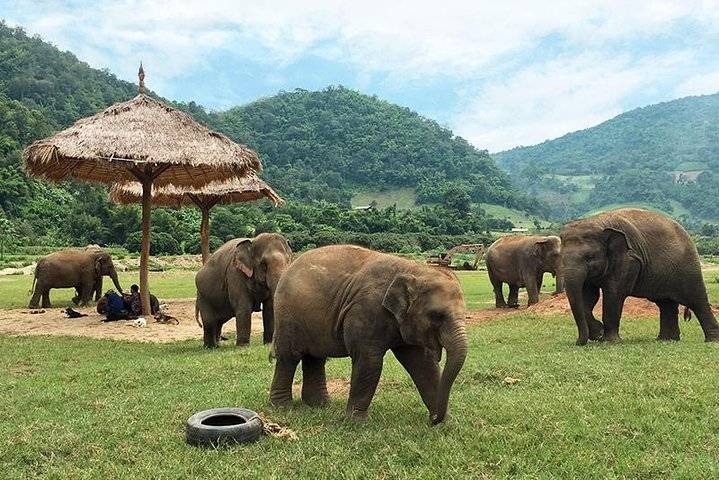
Highly regarded as one of the most truly ethical elephant sanctuaries in Thailand, Elephant Nature Park was one of the first rescue and rehabilitation sanctuaries established in Thailand. The park is considered a pioneer in the treatment of rescued animals. It is dedicated to the rehabilitation and care of “retired” elephants, rescued from riding camps, logging, circuses, and other exploitative entertainment purposes. Elephant Nature Park has received international recognition and numerous awards for its conservation efforts, animal welfare standards, and its role in transforming elephant tourism in Thailand.
Elephant Nature Park does not permit or promote elephant riding or performances. There are many volunteer opportunities at the park where people can contribute to daily operations. This includes feeding and bathing elephants, helping with park maintenance, and participating in community outreach activities.
Elephant Freedom Village, Chiang Mai
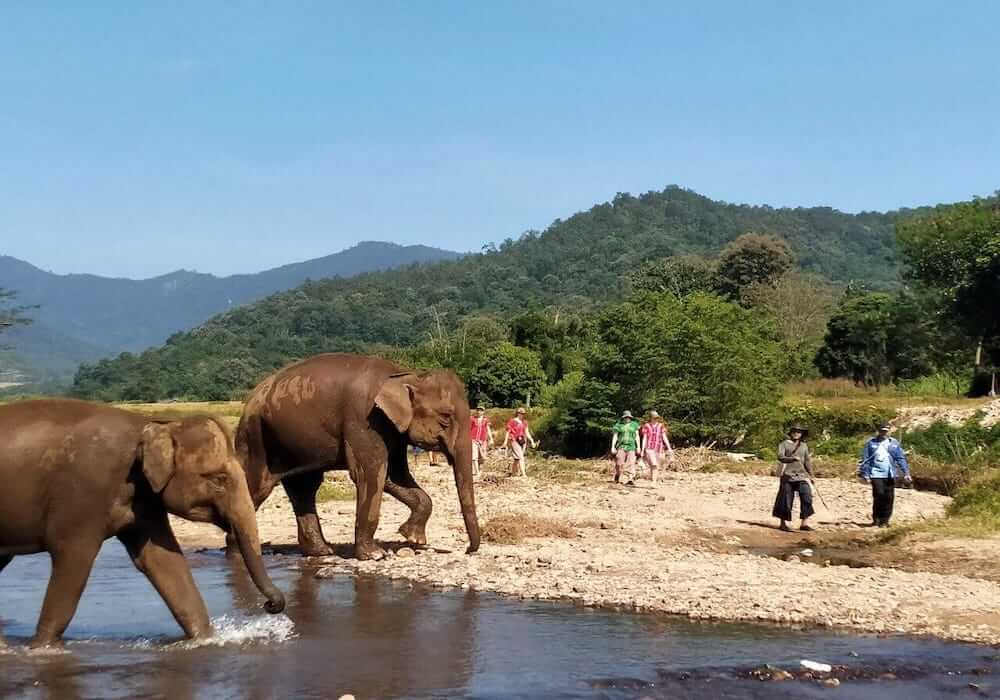
Elephant Freedom Village collaborates closely with local Karen hill tribe communities, whose cultural traditions and livelihoods have historically been closely connected to elephants. The elephants in this sanctuary are located in a natural environment where they are free to roam around in the forests as they like. Visitors are permitted to feed the elephants, help them bathe, and observe them in their natural environment. This sanctuary does not permit rides. Alongside observing the elephants, visitors have an opportunity to learn more about hill tribe traditions through hands-on cultural experiences, such as sharing a meal in a local village home and helping with the coffee harvest.
Phangan Elephant Sanctuary, Koh Pha Ngan
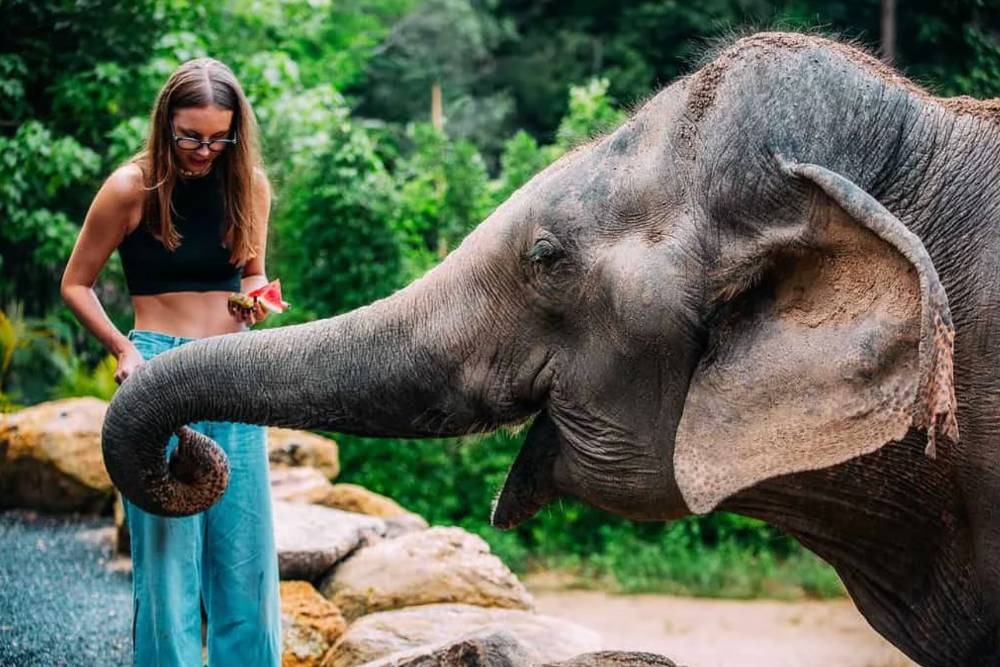
Considered Koh Pha Ngan’s first ethical elephant sanctuary, Phangan Elephant Sanctuary describes itself as a “home for rescued animals.” The sanctuary operates on a strict no-riding, no-bathing, and no-entertainment policy, offering an observation-only experience that prioritizes elephant comfort. Set deep within the jungle, the sanctuary provides a peaceful, natural environment where elephants are free to roam and forage as they like. Educationally driven, the sanctuary encourages visitors to observe quietly while also learning about each elephant’s background, the impacts of exploitation in tourism, and the importance of conservation practices.
Samui Elephant Sanctuary, Koh Samui
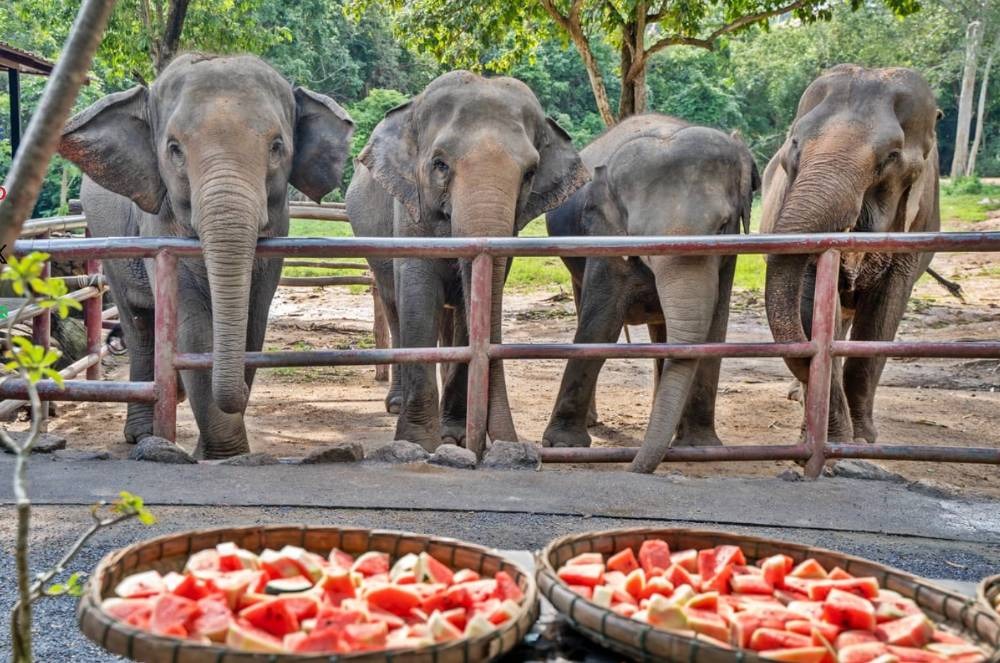
Samui Elephant Sanctuary, located on Koh Samui, is widely regarded as one of the island’s more ethical elephant experiences. The sanctuary focuses on rescuing elephants from the tourism and logging industries and providing them with a safe, natural environment where they are not ridden, chained, or forced to perform. Visitors observe elephants roaming freely, socializing, mud bathing, and foraging at their own pace, while learning about elephant behavior, welfare, and the challenges facing elephants in Thailand.
Phuket Elephant Sanctuary, Phuket
Phuket Elephant Sanctuary is often considered one of the most ethical elephant sanctuaries in southern Thailand. It provides a retirement home for elephants rescued from logging, trekking, and entertainment industries, allowing them to live in a peaceful, natural environment free from riding, performances, or forced interaction. The sanctuary follows a strict observation-only policy, where visitors walk through forested areas and watch elephants bathe, forage, and socialize naturally. Phuket Elephant Sanctuary aims to raise awareness about ethical tourism while supporting long-term care for rescued elephants.
How to tell if an elephant camp is unethical
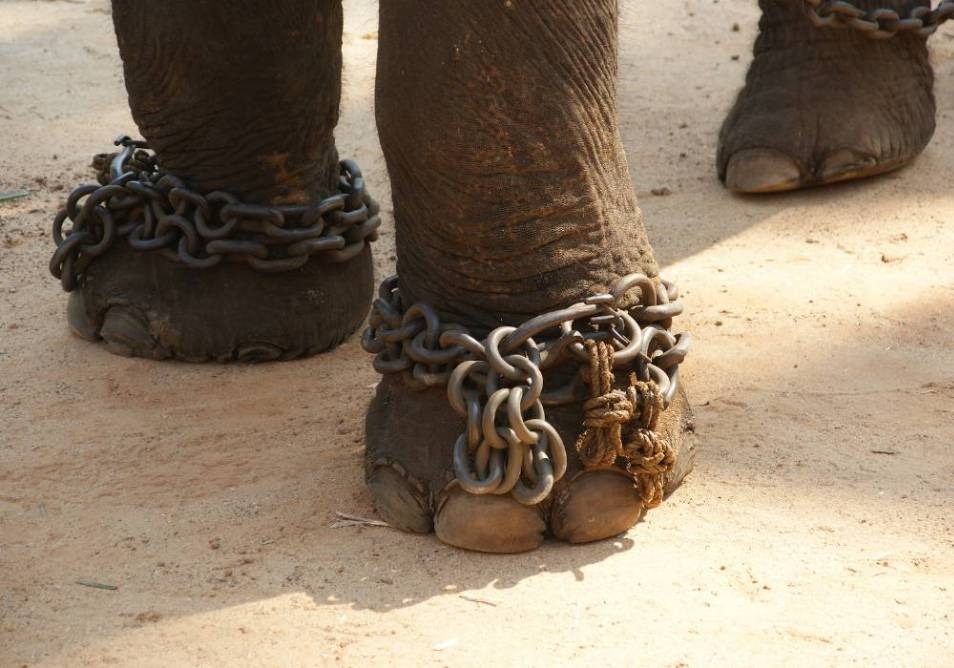
Unfortunately, many elephant sanctuaries continue the cycle of harm and exploitation, and even some sanctuaries that label themselves as “ethical” can still participate in harm and exploitation. Here are some red flags to look out for:
1. Elephant riding
Although this is a commonly sought-after experience for many travellers, elephant riding is very harmful for elephants. Elephants’ backs are not designed to carry heavy amounts of weight, and riding often results in long-term physical damage. Elephant riding also often involves painful and abusive training methods.
2. Elephant shows
Elephant shows are another major indicator of unethical practices. Performances that involve activities such as painting, dancing, or performing tricks are typically the result of exploitative training methods, often relying on punishment and abusive practices.
3. Constant use of chains, hooks, and restraints
While short-term restraint may sometimes be used briefly for medical treatment or safety reasons, elephants kept chained for long periods are often controlled for convenience rather than care. Prolonged restraint can lead to many physical issues as well as severe psychological stress.
While there are other signs, these are the major ones to watch out for. Truly ethical sanctuaries focus on genuine care for the elephants, observation, education, and allowing elephants to behave naturally, with minimal human interference and a clear commitment to long-term welfare.
Elephant watching in Thai national parks
Thailand is home to over 100 national parks covering a wide range of landscapes, including forests, mountains, and marine areas. These parks are famous for their diverse ecosystems and rich wildlife. Managed by Thailand’s Department of National Parks, Wildlife and Plant Conservation (DNP), several national parks serve as habitats for herds of wild elephants. Here are a few to visit if you’re looking for some wild elephants to spot.
Khao Yai National Park
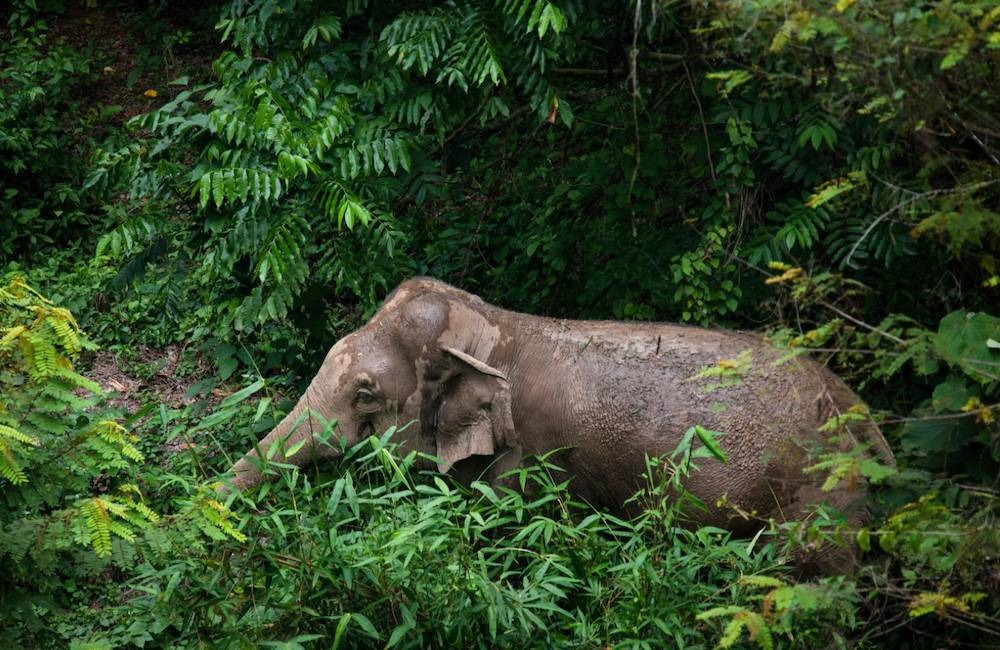
Established in 1962, Khao Yai is Thailand’s oldest national park. Estimates suggest there are around 300 wild elephants in Khao Yai, making it one of the largest elephant habitats in the country. The park offers excellent wildlife-watching opportunities, home not only to elephants but also to monkeys, gibbons, hornbills, and more. Located just a few hours’ drive from Bangkok, Khao Yai is easily accessible for day trips or short stays. Visitors can choose from a range of nearby accommodation options and enjoy natural highlights such as the scenic Haew Suwat and Haew Narok waterfalls.
Kui Buri National Park
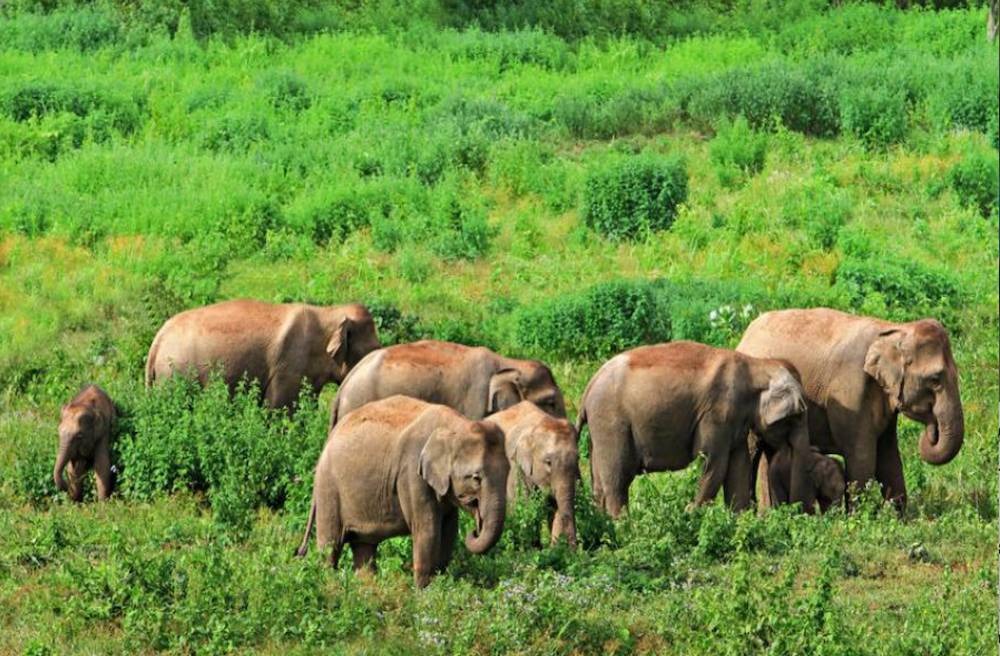
Kui Buri is known for having one of the highest success rates for spotting wild elephants in Thailand. It is home to around 250–300 elephants, making it one of the largest wild elephant populations in the country, second only to Khao Yai. In addition to elephants, the park is home to other species such as gaur (Indian bison), deer, langurs, and many bird species, making it a biodiversity hotspot. Located about an hour’s drive away from Hua Hin, Kui Buri is a popular day-trip destination for tourists staying close by.
Kaeng Krachan National Park
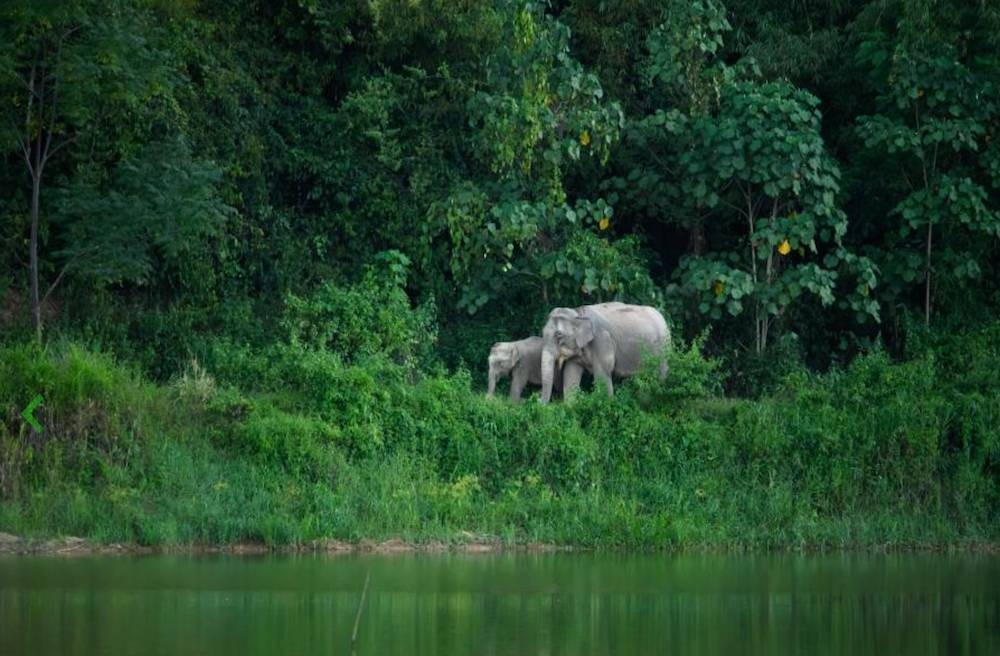
Kaeng Krachan is Thailand’s largest national park, spanning roughly 2,915 square kilometers. The park supports a substantial population of wild Asian elephants, estimated at around 200 to 250, though numbers can fluctuate due to migration and natural conditions. As part of the Western Forest Complex, an extensive network of protected areas, Kaeng Krachan is among the most biologically diverse regions in Southeast Asia. This makes it a critical conservation spot not only for elephants but for a wide range of wildlife species.
Khao Sok National Park
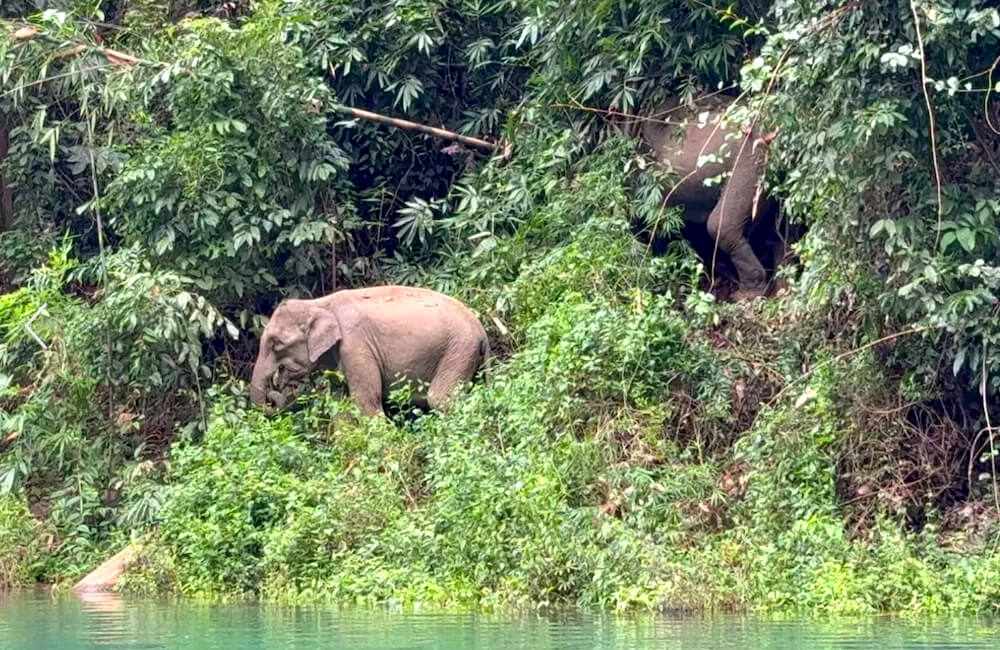
Khao Sok National Park is located in Surat Thani Province in southern Thailand. It is part of the larger Surat Thani rainforest ecosystem, one of the oldest and most diverse rainforests in the world. Due to the dense forest and the wandering nature of elephants, it is difficult to determine exact population numbers, but the park is known to host wild Asian elephants. Khao Sok is considered one of the best places in Thailand to see elephants in the wild, although sightings are never guaranteed.
Threats to wild elephants in Thailand
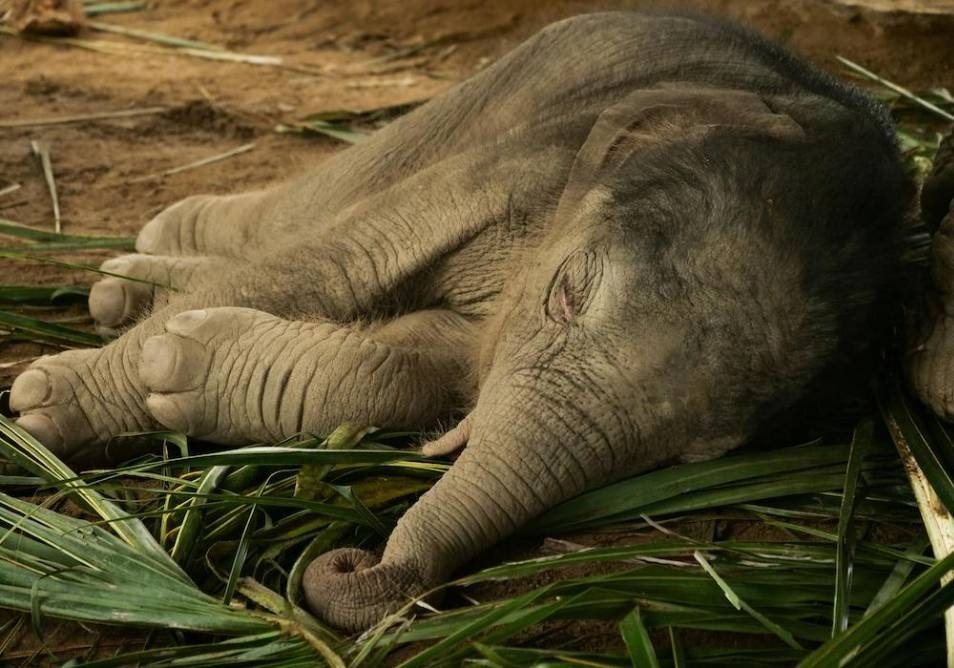
Unfortunately, the Asian elephant is currently classified as “Endangered” on the IUCN Red List, with populations declining across its range primarily due to habitat loss and illegal exploitation. In Thailand, wild elephants are an especially important yet vulnerable part of the country’s natural heritage. Understanding the threats they face, alongside the conservation efforts in place to protect them, is essential to ensuring that the Asian elephant continues to survive in the wild.
Habitat loss and fragmentation
One of the most serious threats facing wild elephants in Thailand is the loss and fragmentation of their natural habitats. Agricultural expansion, urban development, and deforestation continue to shrink and divide the forests elephants depend on. Over time, this means that these elephants lose their homes, resulting in the loss of their living space and restricting their ability to roam freely, forage effectively, and access sufficient food.
Poaching and illegal wildlife trade
Despite existing legal protections, elephants in Thailand remain vulnerable to poaching and the illegal trade in ivory, skin, and other body parts. Although laws are in place to safeguard them, enforcement challenges and persistent demand at both domestic and international levels continue to drive these activities.
Exploitation within the tourism industry
Many elephants in Thailand are still taken from the wild or bred in captivity specifically for the tourism industry. Once in captivity, many undergo harsh and abusive training methods designed to make them obedient for rides, performances, or other tourist attractions. These practices can cause both physical and psychological harm, including injuries, stress, and long-term health problems.
Conservation Efforts
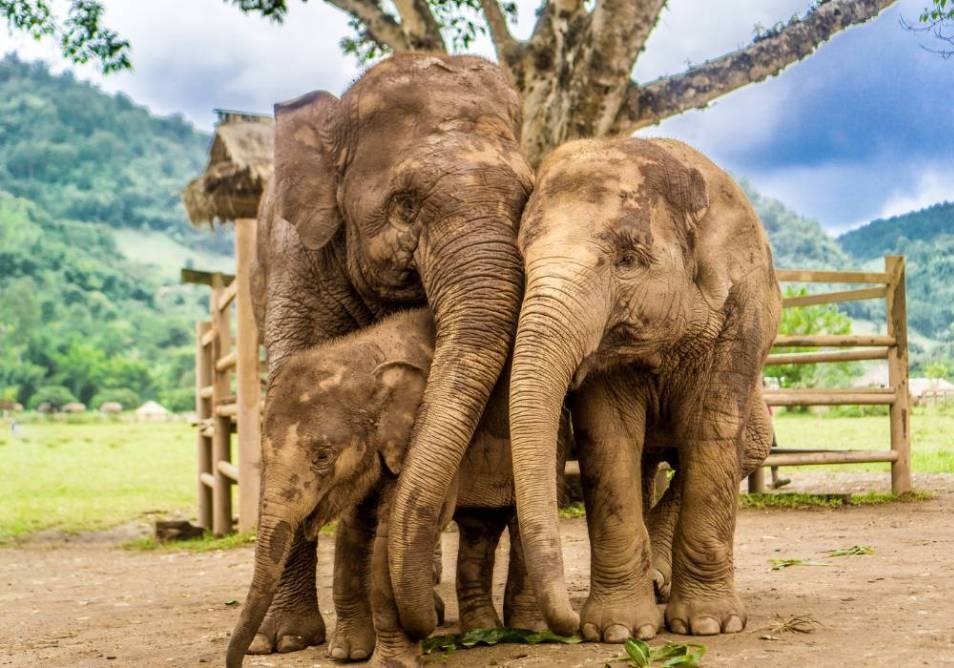
Conservation laws and policies
Thailand has implemented a variety of laws and regulations to safeguard elephants and other wildlife. Among the most important is the Wild Animal Protection and Reservation Act B.E. 2535 (1992), which establishes a legal framework for the protection and safeguarding of wild animals, setting rules to prevent harmful activities, and providing mechanisms to ensure their survival and conservation.
Protected areas and sanctuaries
The Thai government has established a network of national parks, wildlife sanctuaries, and protected conservation areas to safeguard elephants’ natural habitats. These protected spaces provide a safe environment where elephant populations can live, forage, and reproduce, supporting their recovery and long-term survival.
Anti-poaching measures
To address illegal hunting and wildlife trafficking, Thai authorities have intensified anti-poaching measures by increasing ranger patrols, implementing advanced monitoring and surveillance technologies, and enforcing wildlife protection laws more rigorously. These efforts aim to deter poachers and safeguard vulnerable elephant populations.
Ethical tourism initiatives
There is an increasing move toward ethical elephant tourism in Thailand, promoting sanctuaries and wildlife tourism practices that place elephant care and well-being above profit and entertainment. These approaches seek to eliminate harmful activities while fostering conservation efforts and encouraging respectful, educational interactions between visitors and elephants.
Community involvement and education
Many conservation programs actively involve local communities by raising awareness about the importance of elephant conservation and developing practical strategies to reduce human–elephant conflict, ensuring that both people and wildlife can coexist more safely.
Cultural, religious, and historical role of elephants in Thailand
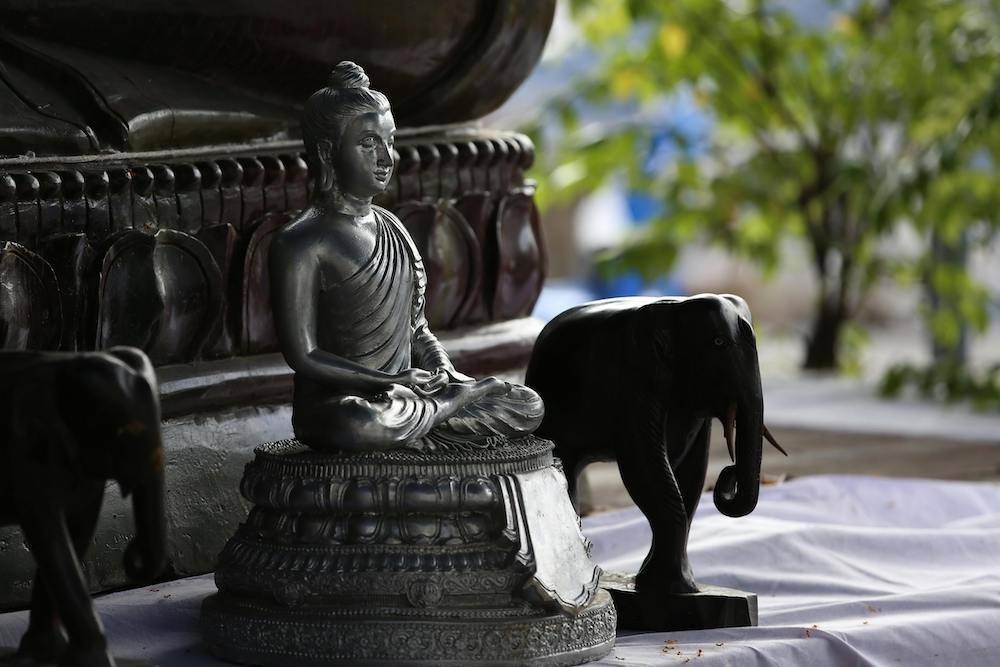
Elephants have held a deeply significant place in Thailand’s culture, religion, and history for centuries. Historically, they were symbols of power and prestige, playing a vital role in warfare, royal ceremonies, and transportation, particularly during the Ayutthaya period.
Historically, elephants played a key role in Thai warfare, serving as mounts for kings and generals. They were used in several major conflicts, including the Sukhothai campaigns (13th–14th centuries), the Ayutthaya–Burmese wars (16th century), and the Burmese–Siamese War (1765–1767). The size and strength of the elephants made them powerful weapons and symbols of royal authority. White elephants, considered sacred and auspicious, were especially revered and closely associated with Thai royalty, symbolizing prosperity and divine protection.
In religious and spiritual contexts, elephants are linked to Buddhism and Hindu influences, most notably through the figure of Ganesha (locally known as Phra Phikanet), the elephant-headed deity that represents the removal of obstacles, alongside wisdom and success. Elephants also appear in Buddhist art, temple iconography, and folklore.
Culturally, elephants have long been intertwined with rural life and traditional livelihoods, particularly in northern Thailand, where mahouts (traditional elephant keepers) developed close, multigenerational relationships with their elephants.
Today, while their role has shifted due to modernization and conservation concerns, elephants remain a powerful national symbol of Thailand, representing heritage and identity.
In conclusion, elephants are a key part of the national Thai landscape, and have been for a very long time. Visiting these regal animals can make for a remarkable experience, but make sure to do it with the care that they deserve. While conservation efforts exist, tourism also impacts their well-being, so care and respect are essential.