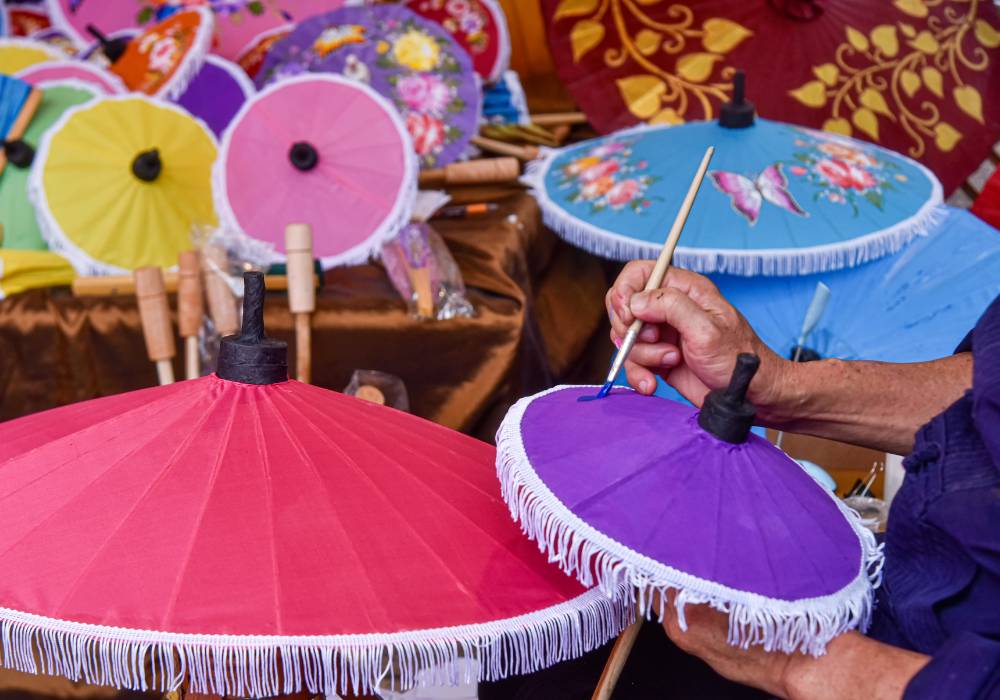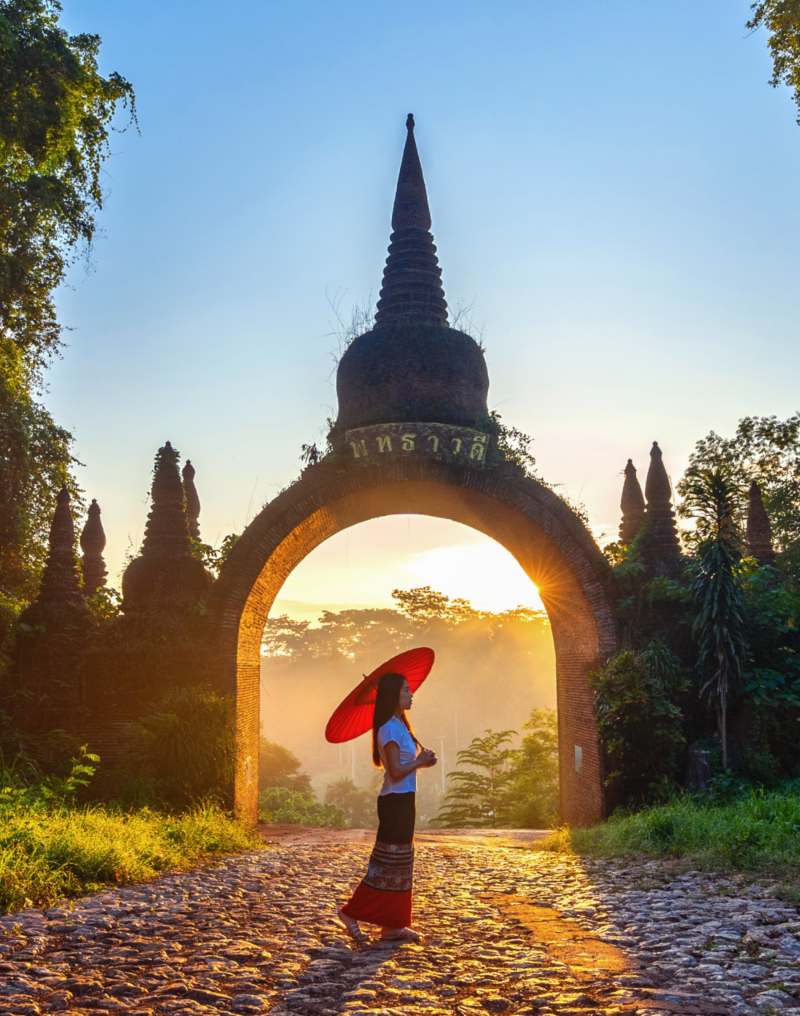
The Old City in Chiang Mai alone could fill several days, temples, markets, street food, and a pace of life that makes it easy to slow down without feeling like you are missing anything. However, the region that surrounds it is just as interesting and in many cases it is what guests remember most when they look back on a trip to Chiang Mai.
The day trips we offer from Chiang Mai are the ones we have refined over years of working in this region, built around the stops that consistently deliver and structured to make the most of a full day. This guide is a full overview of the day trips and tours we run from Chiang Mai, from the mountains east and west of the city to Chiang Rai to the national parks and the hill tribe villages, there is something for every traveller.
Doi Suthep and Chiang Mai City Tour
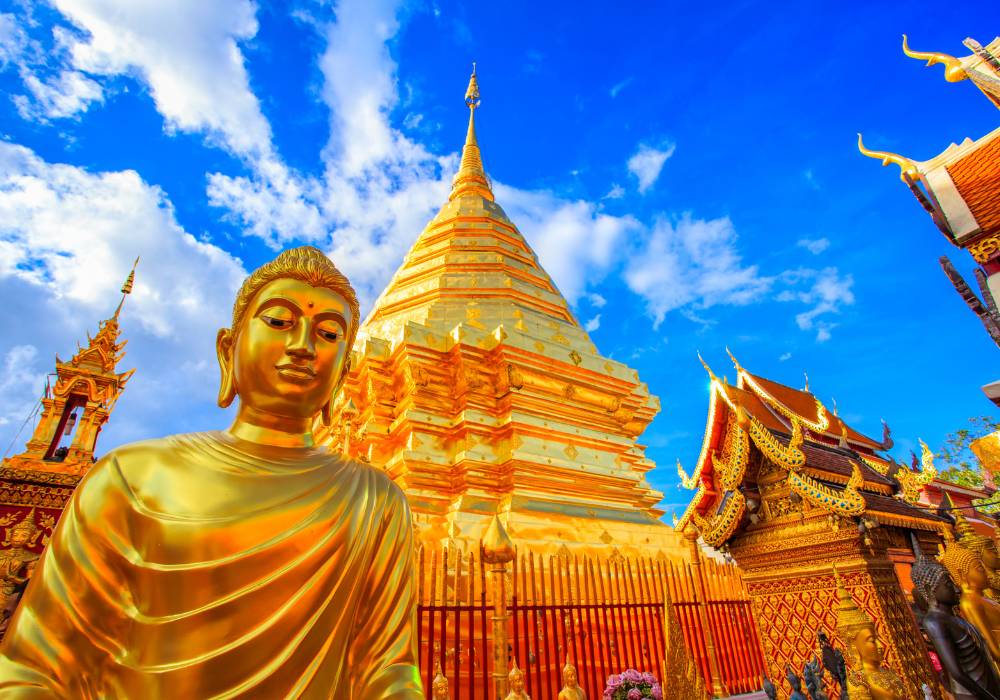
For first-time visitors to Chiang Mai, a morning at Doi Suthep is essential. Sitting at over 1000 metres above the city, Wat Phra That Doi Suthep is one of the most sacred temples in northern Thailand and the landmark most synonymous with the city itself. We always recommend arriving early, either at sunrise or during the late afternoon before sunset, when the monks gather for their chanting ceremonies. The atmosphere at these hours is unlike anything else in the city, and the crowds are a fraction of what you’ll encounter mid-morning.
Our tour starts at Doi Suthep and then we return to the city centre for a traditional northern Thai lunch, where guests have the chance to try regional dishes that are distinct from the Thai food most visitors encounter elsewhere in the country.
The afternoon is spent exploring the Old City. Chiang Mai’s historic centre is compact and walkable, built around a square moat that marks the boundaries of the original walled city. Key stops include Tha Phae Gate, the most recognisable landmark in the old city and a useful reference point for understanding Chiang Mai’s layout; Wat Phra Singh, one of the city’s most revered temples, which houses an important Buddha image in the Lanna style, and Wat Chedi Luang, a partially ruined temple whose main tower once stood over 80 metres tall. Then there is the Three Kings Monument, a bronze sculpture at the heart of the historic district commemorating the rulers who founded the city in 1296.
Where time allows, we include a visit to a local market, an easy way to get a sense of daily local life in Chiang Mai.
Full Day Tour to Chiang Rai
The drive from Chiang Mai to Chiang Rai takes around three hours, and we make good use of it. The first stop is Mae Kachan Hot Springs, a natural thermal spring that serves as a rest break on the journey north. It is a very local spot, residents here use the hot spring water to boil eggs, sold at roadside stalls, which is a good introduction to the region and some of its interesting practices.
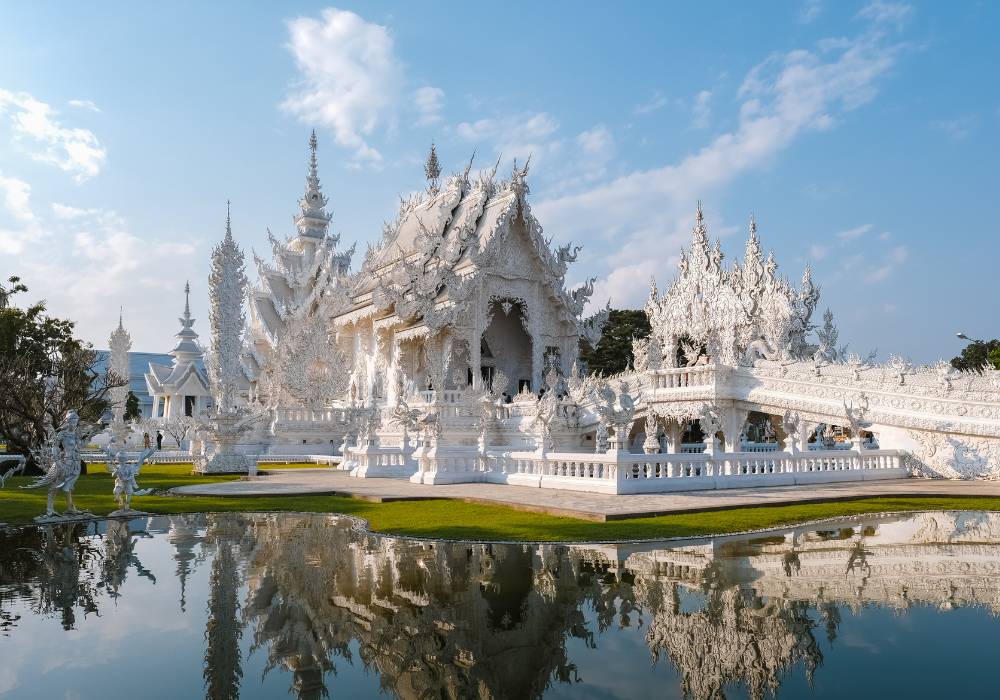
On arrival in Chiang Rai, the first visit is Wat Rong Khun, known internationally as the White Temple, a contemporary work of art as much as it is a place of worship, and one of the most photographed structures in Thailand. From there, the tour continues to Wat Rong Suea Ten, the Blue Temple, a striking contrast in colour and atmosphere. Together, these two temples represent some of the most iconic architecture in the entire country.
After lunch at a local restaurant, the tour visits a Karen village on the outskirts of Chiang Rai. The Karen are one of several hill tribes indigenous to the mountainous regions of northern Thailand, and their communities offer a rare glimpse into a way of life that has remained largely unchanged for generations. The Karen Long Neck community is among the most distinctive, women of this group traditionally wear brass rings around their necks from childhood, a practice with deep cultural roots. Other hill tribes in the region include the Akha, Lahu, and Hmong peoples, and depending on the village visited, guests may encounter more than one community.
The day concludes at Baan Dam, known as the Black House Museum, a sprawling complex of dark-toned buildings and structures created by Thai artist Thawan Duchanee over the course of several decades. It is a deeply unconventional place, filled with animal bones, hides, and ceremonial objects, and it provides a fascinating counterpoint to everything else seen on the day.
Optional, Golden Triangle visit: For those who prefer to swap one of the above stops for a different experience, we offer the option to visit the Golden Triangle instead, the point where Thailand, Myanmar, and Laos converge at the Mekong River. A short longtail boat journey on the river is included, along with a visit to the House of Opium, a museum documenting the history of the opium trade across the region.
Every itinerary we offer can be adjusted. If there is a combination of stops that works better for your group, we are happy to build the day around it.


Doi Inthanon National Park Tour

At over 2500 metres above sea level, Doi Inthanon is the highest peak in Thailand. The national park that surrounds it is a completely different landscape from anything found in Chiang Mai city, cooler, quieter, and home to an exceptional range of wildlife, including over 380 recorded bird species. For birdwatching enthusiasts, Doi Inthanon is considered one of the finest sites in all of Southeast Asia, with species present here that are found nowhere else in Thailand.
The drive from Chiang Mai takes approximately 1.5 to 2 hours, and we make several stops along the way. The route passes a number of waterfalls and mountain viewpoints, and we factor time into the journey to stop at the most impressive of these rather than driving past them. On arrival at the park, the tour visits Wat Phra That Si Chom Thong, a revered temple at the entrance to the national park, followed by the twin royal pagodas, Naphamethanidon and Naphaphonphumisiri, built in honour of the King and Queen of Thailand and set within immaculately kept gardens that offer incredible views across the forest.
Where the itinerary allows, we also include a visit to a Karen village within the park boundaries, a very different experience from the hill tribe visits available closer to Chiang Rai, and one that gives a more immediate sense of life at altitude in northern Thailand.

Elephant Sanctuary Visit
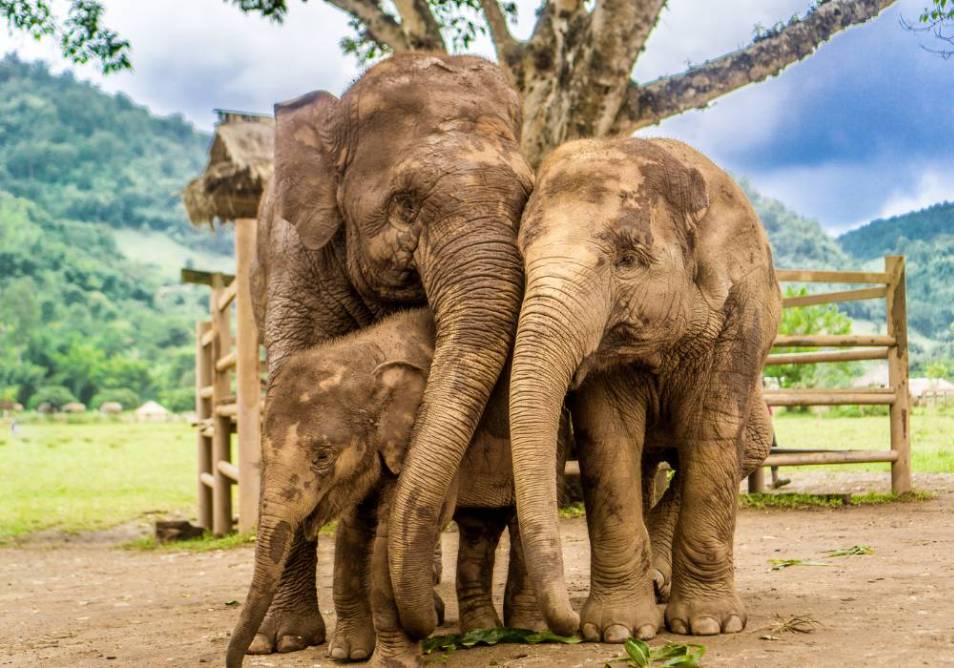
Chiang Mai is the most well-known destination in Thailand, and arguably in all of Southeast Asia for ethical elephant experiences. The sanctuaries in this region have over the past decade moved decisively away from riding and performance-based tourism, and the programmes offered today are centred on education, conservation, and genuine animal welfare.
A typical day at one of our recommended sanctuaries begins with an introduction to the resident elephants and the story behind each one, many have been rescued from logging operations or tourism industries and are in various stages of rehabilitation. Guests then prepare food for the elephants and then time is spent with the animals in a natural setting, observing their behaviour and social dynamics up close. Most programmes include a bathing session, where guests help guide the elephants into a river or mud pit, the mud serves as a natural sunscreen and insect repellent for the elephants, and it tends to be one of the most memorable parts of the day.
Both full and half-day programmes are available. The sanctuaries we work with are located between one and one and a half hours from Chiang Mai city centre, either to the north or west. Since the journey accounts for a meaningful part of the day in any case, we often recommend combining the sanctuary visit with other attractions in the same direction. For those heading north, a stop at Sticky Waterfall pairs particularly well. Bamboo rafting along the river is another option frequently added for groups who want a fuller day.
Mae Kampong Village

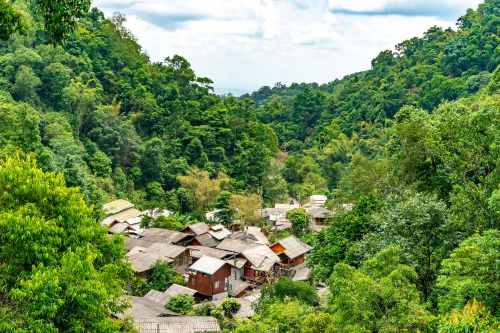
Mae Kampong is the kind of place that is increasingly rare to find in Thailand. A small, traditional hill village east of Chiang Mai, it has remained largely unchanged in both appearance and character, old teak houses, narrow paths between buildings, and a pace of life that feels totally distant from the city.
Our tours include a local guide who provides real context for what you are seeing, the architecture, the community structure, and the small details of daily life that are easy to miss without someone to explain them. The village is also well regarded for its coffee, grown on the slopes surrounding the settlement and served in small local cafes that have become an attraction in their own right.
After exploring the village, the tour continues to Mae Kampong Waterfall, a short walk through forest before the return journey. The day ends with dinner in the village, where guests try Mae Kampong sausages, a regional speciality that has earned a reputation across northern Thailand as some of the best in the country.
Thai Cooking Class

Chiang Mai has some of the best Thai cooking schools in the country, and this is one activity we think is worth doing here rather than saving for Bangkok or elsewhere. The northern Thai culinary tradition is distinct, with different ingredients, different techniques, and a different relationship with herbs and spices, and we believe learning to cook here gives a more complete picture of Thai food as a whole.
Both half-day and full-day options are available, as well as private and small group formats depending on preference.
The day begins at a local market, where the guide walks participants through the ingredients that define northern Thai cooking — galangal, kaffir lime leaves, fresh turmeric, lemongrass, and others — explaining how to identify quality produce and what each element contributes to a dish. From the market, the group moves to the cooking school, where participants prepare their own dishes under instruction. The number of dishes covered depends on the programme chosen: half-day courses typically cover three dishes, full-day programmes allow for four or more. At the end of the session, every participant receives a recipe booklet covering everything prepared on the day.
Mon Jam
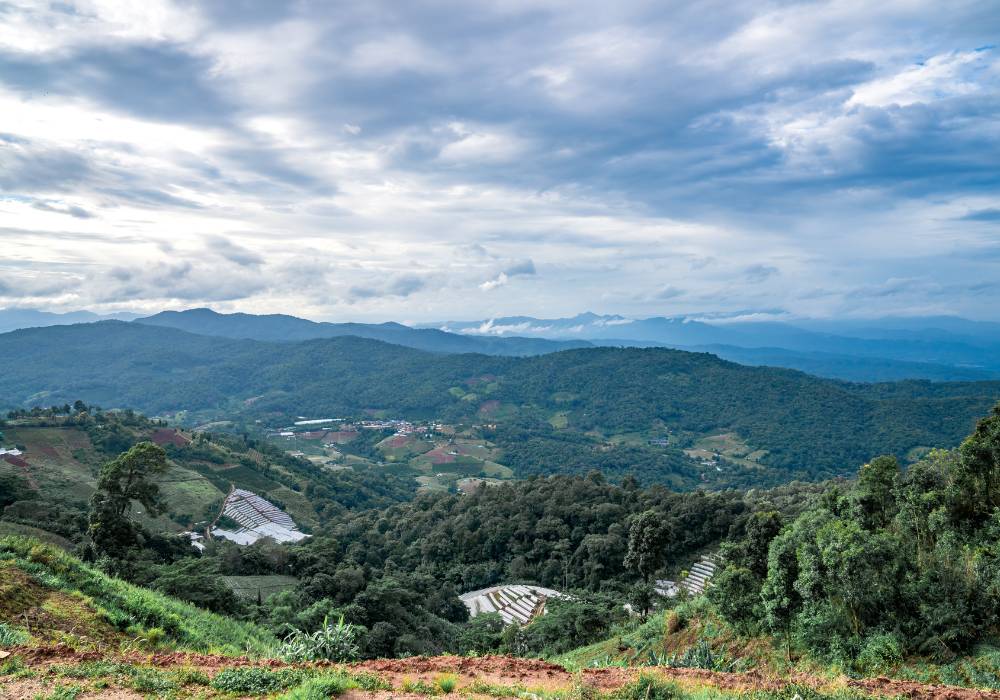
The road north of Chiang Mai into the mountains towards Mon Jam is one of the more scenic drives in the region, a series of switchbacks through forest with long views across the valleys below. The journey itself is part of the experience.
For those with an interest in botany or simply in well-kept gardens, the Queen Sirikit Botanic Garden sits on the route and makes a worthwhile early stop. The collection spans thousands of species gathered from across Thailand and the world, and the glasshouses alone merit a visit. We include this stop for groups who want it and skip it for those who would rather press on.
Further along the route, the tour passes through a series of flower parks set across the hillsides, some of them dedicated to a single variety, including lavender fields and sunflower plots that stretch across the slopes. In our experience these stops tend to be popular with photographers in particular.
Lunch is served at a mountain restaurant with views over the surrounding landscape. For those who want an optional activity in the afternoon, there is a well-recommended zipline operation in the area that we can incorporate into the day for groups who want it.
White Water Rafting and ATV Adventure
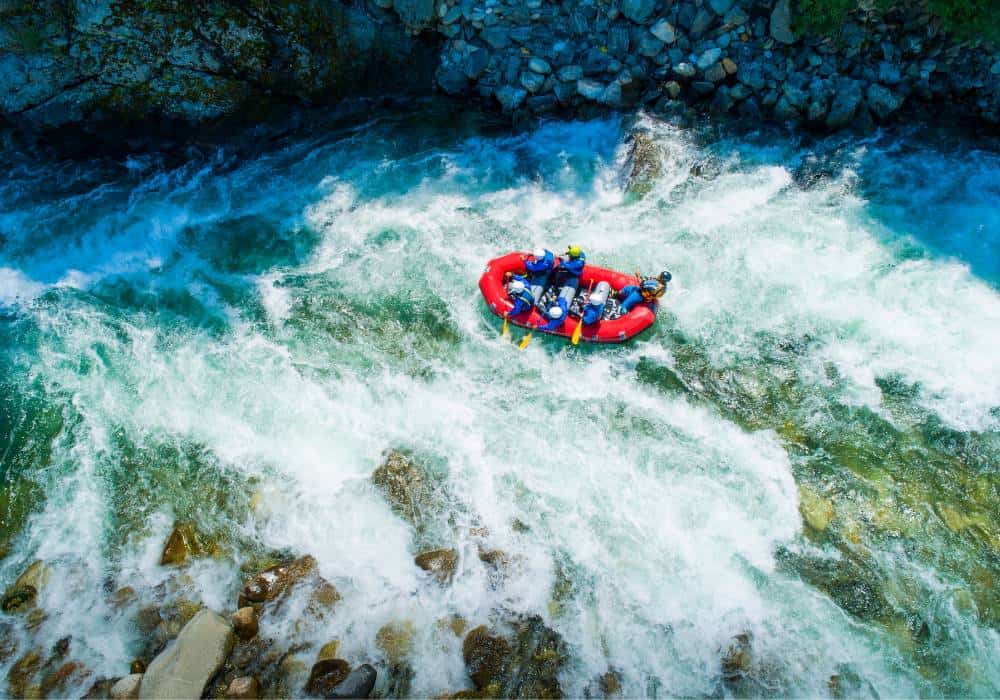
This is the day trip we recommend most often for travellers who want something truly adventurous and a little different from temples and villages.
Both ATV riding and white water rafting are available individually, but the combination of the two in a single day is what we most often suggest, it makes for a truly full and varied day out.
The day begins with hotel pickup and a drive to the ATV camp. After a safety briefing and helmet fitting, participants set out on a three-hour trail that passes through the kind of terrain that is impossible to access any other way, local hill tribe settlements, river crossings, dense forest tracks, and open sections where you may well spot elephants in the distance. For those who have never ridden an ATV before, the learning curve is short, and the guides manage the group throughout.
Lunch is taken back at the camp, after which the group transfers to the Mae Taeng River for the rafting section where the route covers six kilometres of white water. In our experience, guests who have done white water rafting elsewhere in Southeast Asia consistently rate the Mae Taeng as the best experience they have had.
Full and half-day formats are available depending on whether you want to combine both activities or focus on one.
Khantoke Dinner
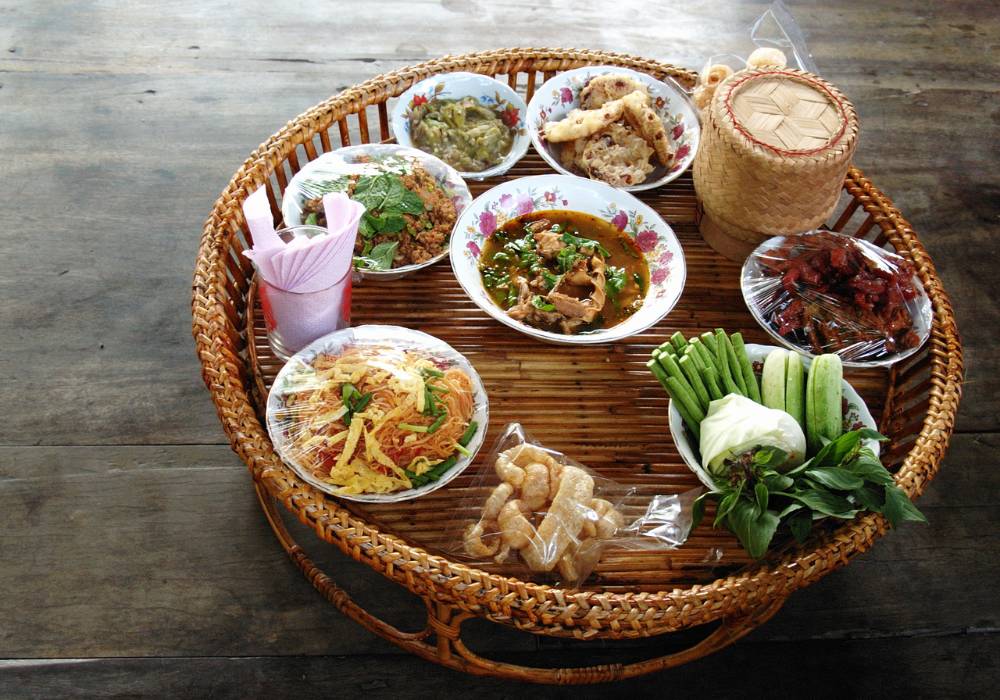
Khantoke is the traditional form of communal dining in northern Thailand, with roots in the Lanna culture that has shaped Chiang Mai for centuries. The name refers to the low round tray on which the meal is served, guests sit on the floor around it, in the traditional style, and dishes are shared across the table rather than ordered individually.
The food is distinctly northern Thai: dishes such as nam prik ong (a minced pork and tomato chilli dip), kaep moo (crispy pork rinds), sai ua (northern Thai herbal sausage), and gaeng hang lay (a slow-cooked Burmese-influenced pork curry) that rarely appear on menus in Bangkok or resort areas. The meal is accompanied by sticky rice, served in small woven bamboo baskets.
The dinner is staged alongside a programme of traditional northern Thai performing arts, classical Lanna dance, hill tribe performances, and live music played on traditional instruments. It is a relaxed evening that gives a different perspective on Chiang Mai’s cultural identity.
The tours represent the experiences we come back to most consistently, and the ones that our guests talk about long after they have left the city.
If you are putting together a trip to Chiang Mai and want help deciding what to prioritise, we are happy to help you decide. Every group is different, and the best itinerary is always the one built around how you actually want to spend your time.