



Monkeys are commonly found across Thailand — from temples and beaches to national parks and city streets. In this guide, you’ll learn about the different types of monkeys in Thailand, where to spot them, their cultural and religious significance, how to behave safely when encountering monkeys, and how to avoid unethical wildlife tourism. By the end, you’ll even be able to tell the difference between macaques, langurs, and gibbons.
Types of monkeys in Thailand
Monkeys (Macaques)
Long-tailed macaque
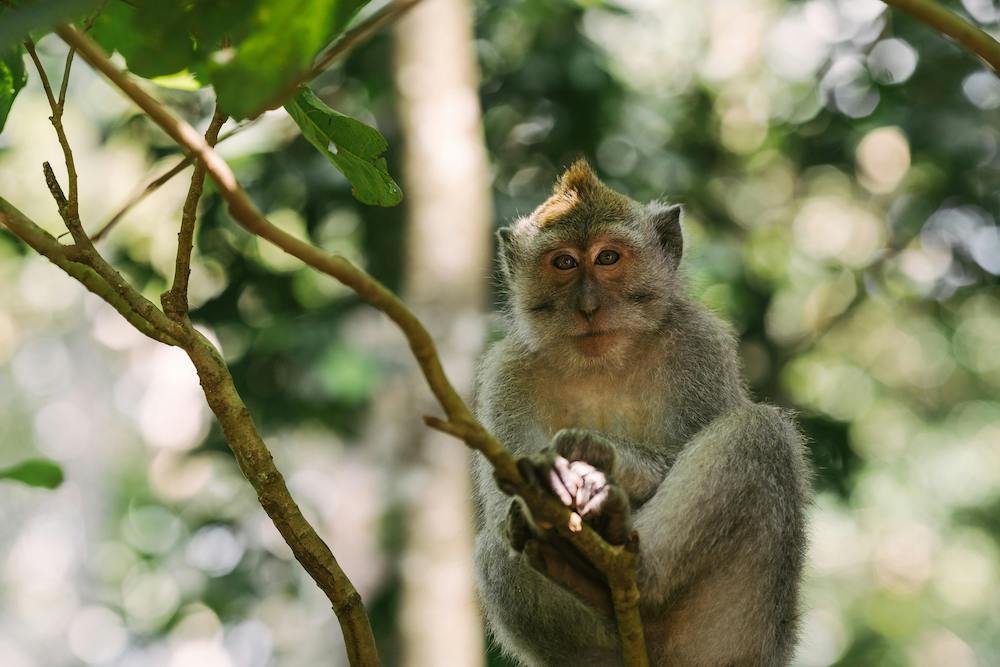
Named the Long-tailed macaque (pronounced “ma-kak”) for its long tail, this macaque is highly adaptable and can be found in many different environments, from rainforests and mangroves to temple grounds and busy city streets. Long-tailed macaques love to be near water especially, and they make for excellent swimmers, thus earning them the name “the crab-eating macaque” due to their tendency to catch and eat crustaceans.
Long-tailed macaques are a common sight at popular tourist destinations, where they have learned to coexist closely with humans. While they are entertaining to watch, visitors are encouraged to admire them from a distance.
Pig-tailed macaque
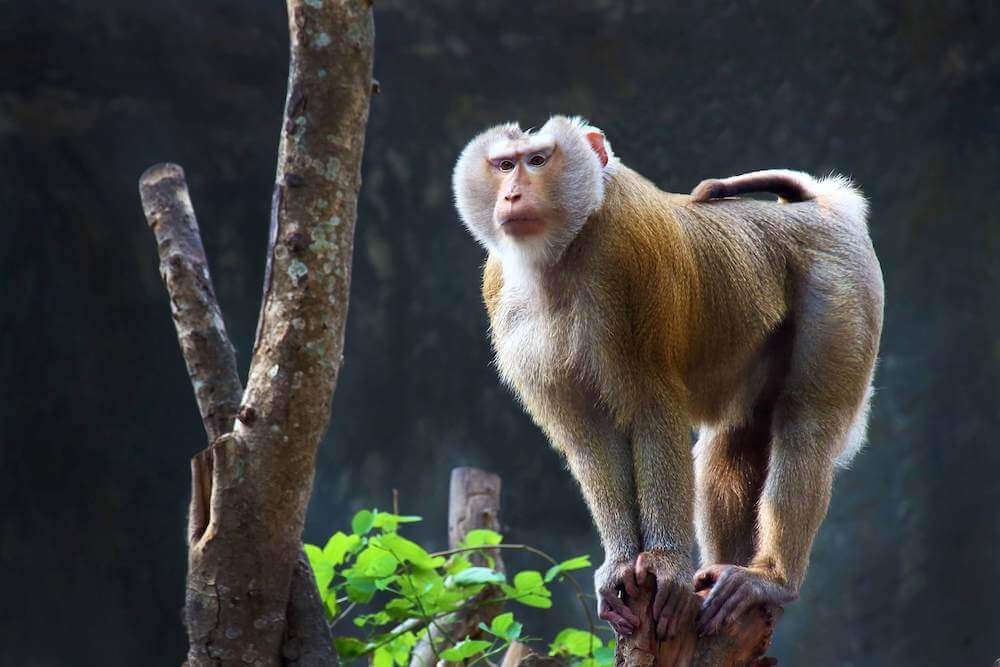
Pig-tailed macaques are named after their short, pig-like tails. In contrast to the long-tailed macaque, they are primarily found in dense rainforests, where they spend much of their time foraging for fruits, seeds, insects, and small animals. Indeed, up to 75% of the pig-tailed macaque’s diet consists of fruit.
Pig-tailed macaques are less likely to be spotted in urban areas, but they can be spotted in forests and national parks. Visitors are encouraged to observe quietly and from a distance, helping to preserve their natural behavior.
Stump-tailed macaque (Bear macaque)
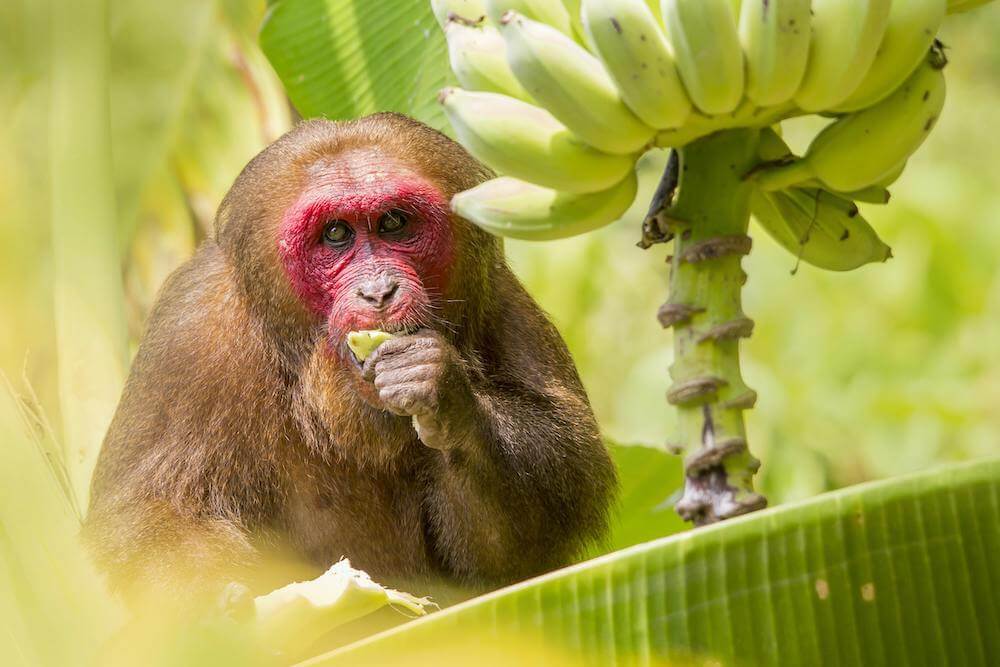
The stump-tailed macaque, also known as the Bear macaque, gets its nickname “bear macaque” due to its thick fur and rounded, stubby tail. They spend most of their time on the ground, less comfortable in trees compared to other macaques.
Bear macaques are highly social and vocal, known for their loud calls (where you might hear them “coo” as a call to one another) and playful interactions amongst each other. However, compared to other macaques, they are shyer around humans, and they are more likely to keep to themselves, but they can still be seen in national parks and protected forest areas.
Rhesus macaque
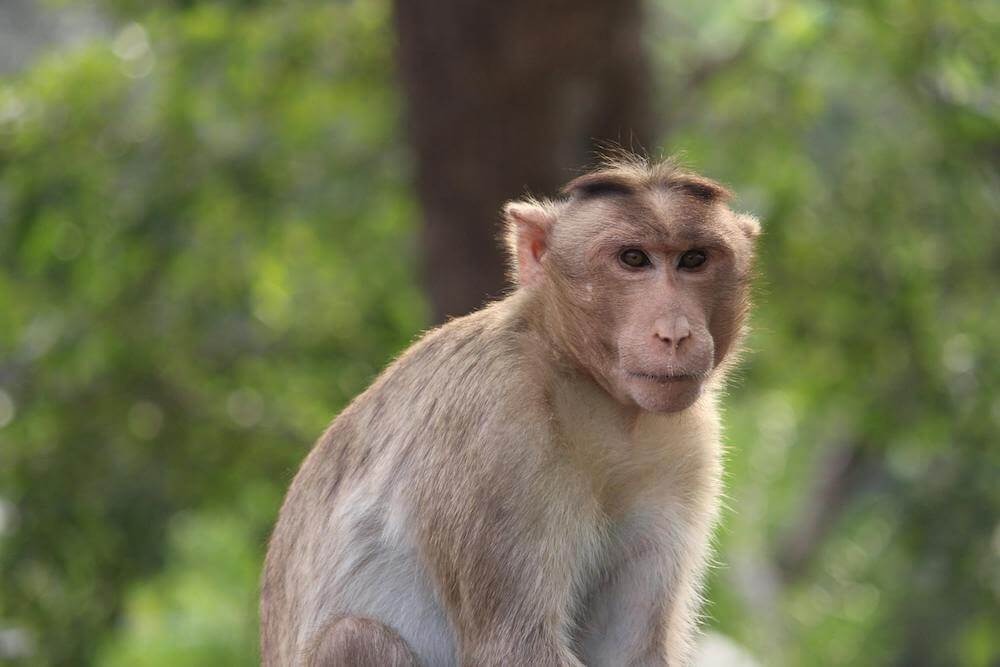
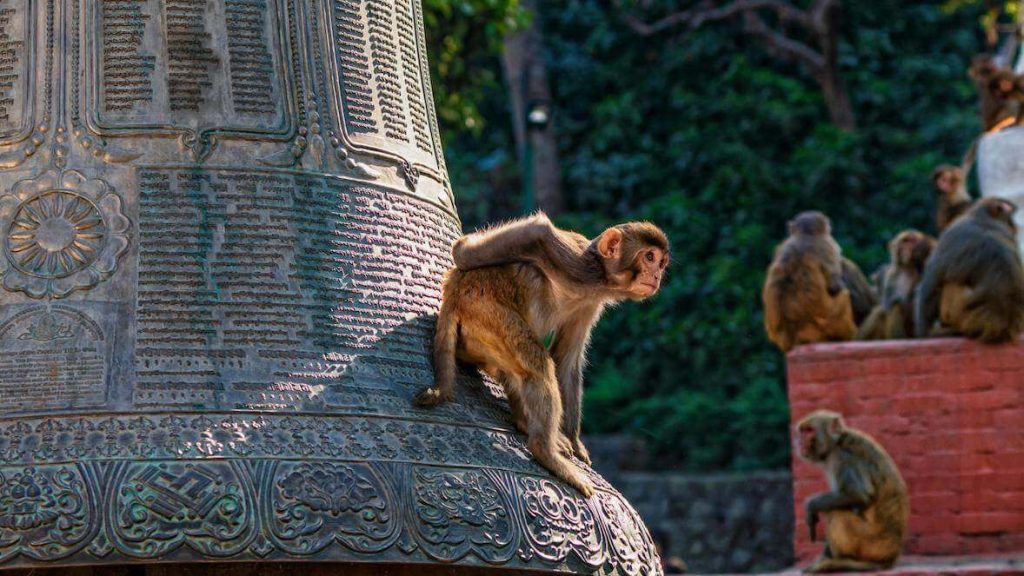
The Rhesus macaque is recognised for its reddish face and prominent cheek whiskers. In contrast to the stump-tailed or pig-tailed macaques, Rhesus macaques are very versatile and thrive in many different habitats, from rainforests to riverbanks, temple grounds, and even busy city roads.
Mirroring their highly diverse habitats, macaques enjoy a highly diverse diet, including fruit, insects, and fish. They are even known for eating human trash, crops, and stealing food directly from people! It is for this reason that tourists must be extra careful around them.
Leaf Monkeys (Langurs)
Dusky langur (Spectacled langur)
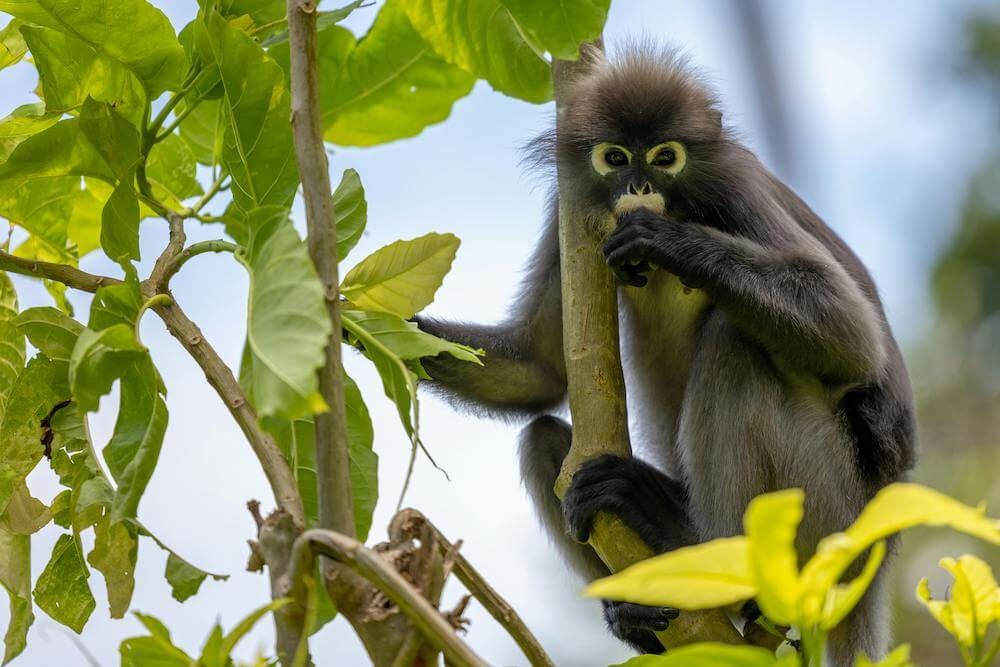
The Dusky langur, also known as the Spectacled langur, can be easily recognised by the pale rings of fur around its eyes, giving it a “spectacled” appearance. Unlike macaques, dusky langurs primarily spend their time in trees. Their diet consists mainly of leaves, fruits, and flowers.
Dusky langurs are calm and social animals, they are generally shy around humans and prefer quieter forested areas, though they can sometimes be spotted alongside rural roads.
Silvered langur
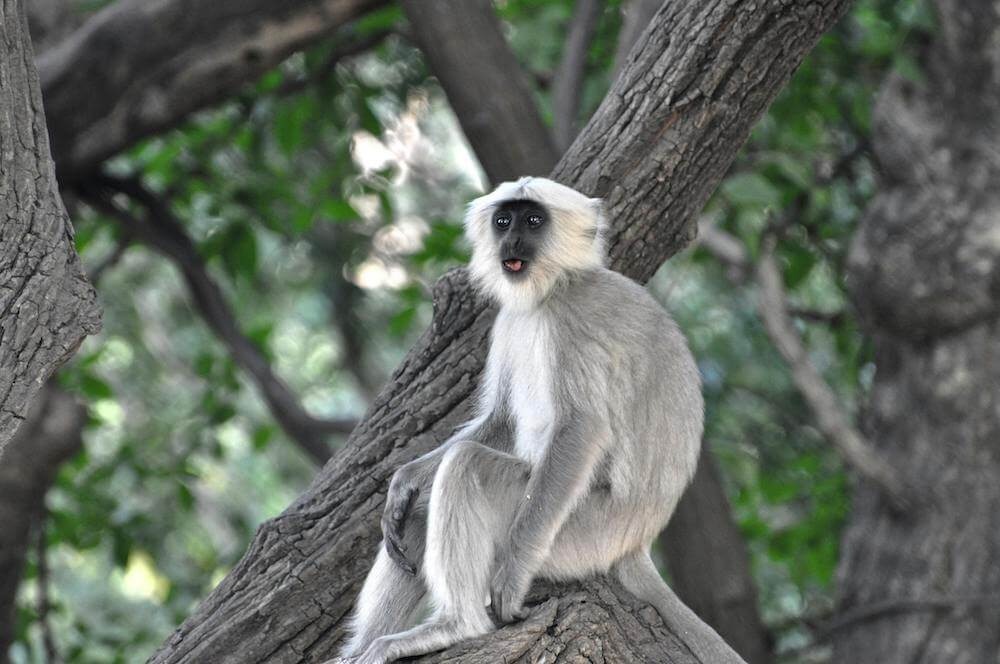
The Silvered langur has a unique and highly recognisable appearance characterised by its grey and white coat, giving it a silver appearance. They live almost entirely in trees, with leaves being their primary source of food and nutrition. They use at least 12 different vocalizations to communicate with one another, using sounds to signal fear, greetings, warnings, and more.
Like the Dusky langur, the Silvered langur is also quite shy, as they prefer to spend their time up in trees and are rarely seen close to urban or tourist areas. However, Silvered langurs are commonly found in national parks and protected forest reserves, if you can spot them up in the trees.
Phayre’s langur
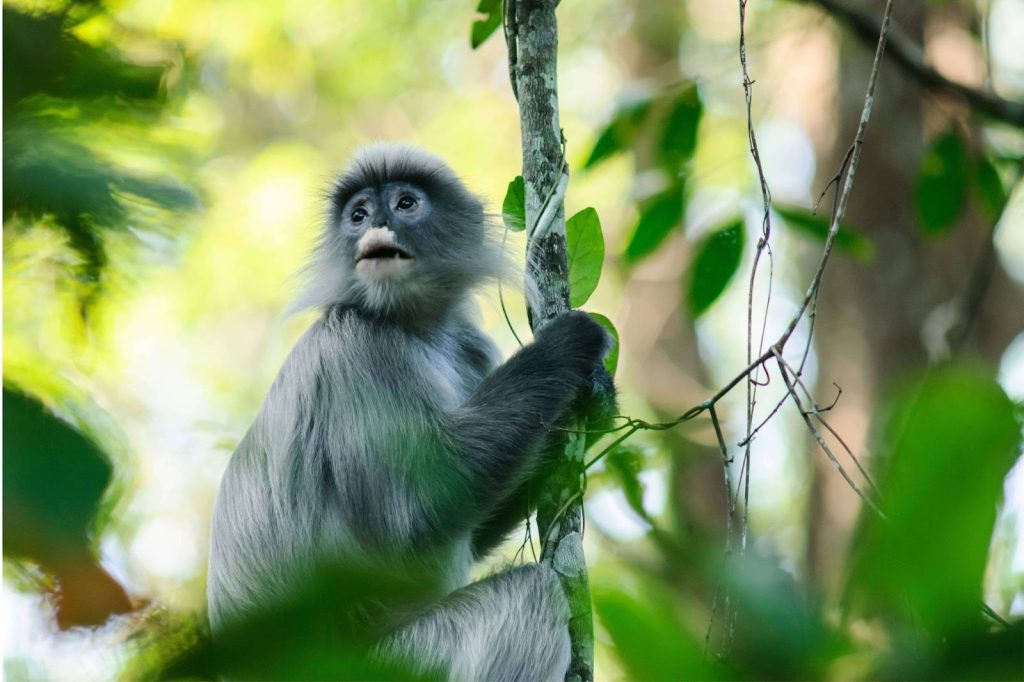
Phayre’s langurs spend most of their time in trees, their diet consisting mostly of leaves, earning it the nickname “Phayre’s leaf monkey”. Unlike the Silvered langur, their vocalizations tend to be more subtle. Naturally shy and elusive, Phayre’s will be a rare sight for most tourists, as they tend to avoid human activity and are often found deep within protected forests and national parks.
Phayre’s langur shares a striking resemblance to the Dusky langur, and it can even be difficult for most to tell the difference. One of the key ways to tell them apart is by their eyes, Dusky langurs have a well-defined outline around their eyes, while the Phayre’s langur’s tend to be softer and may look more grey than pale white.
Apes (Gibbons)
White-handed gibbon (Lar gibbon)
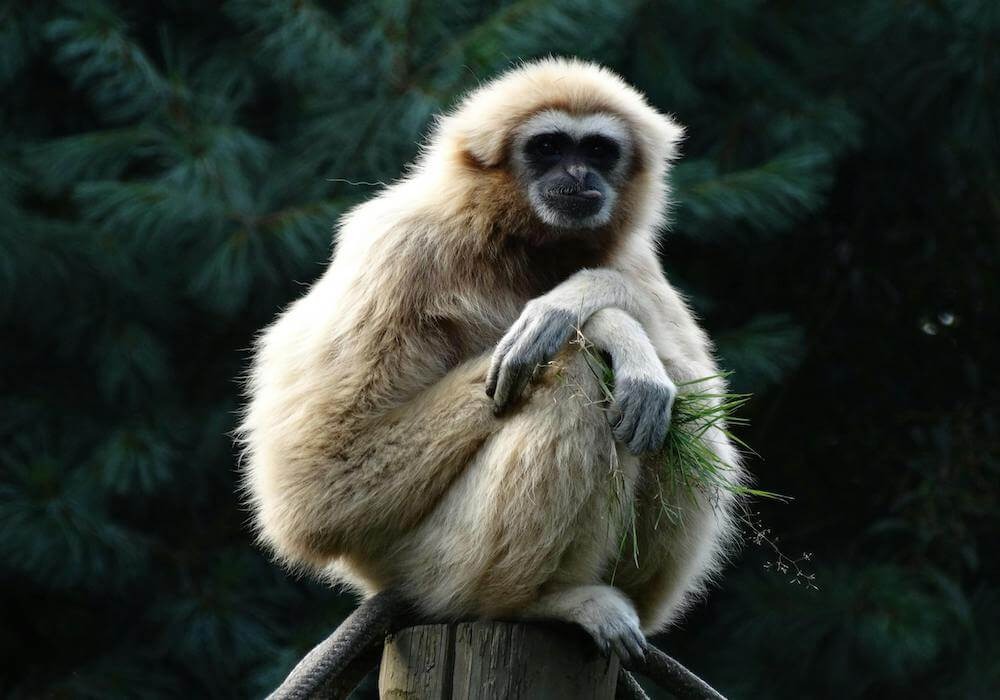
The White-handed gibbon, also known as the Lar gibbon, is the fastest of all the primates. They move so quickly, swinging from branch to branch, that it can sometimes look like they are flying. They spend most of their time in trees, and their diet consists mainly of fruit.
Alongside their remarkable speed and almost flying-like ability, White-handed gibbons are also known for their powerful vocalizations, which can be heard echoing through the forests. Their calls are one of the iconic sounds of Southeast Asian and especially Thai forests, so even if you don’t see a White-handed gibbon, you are very likely to hear one!
Pileated gibbon
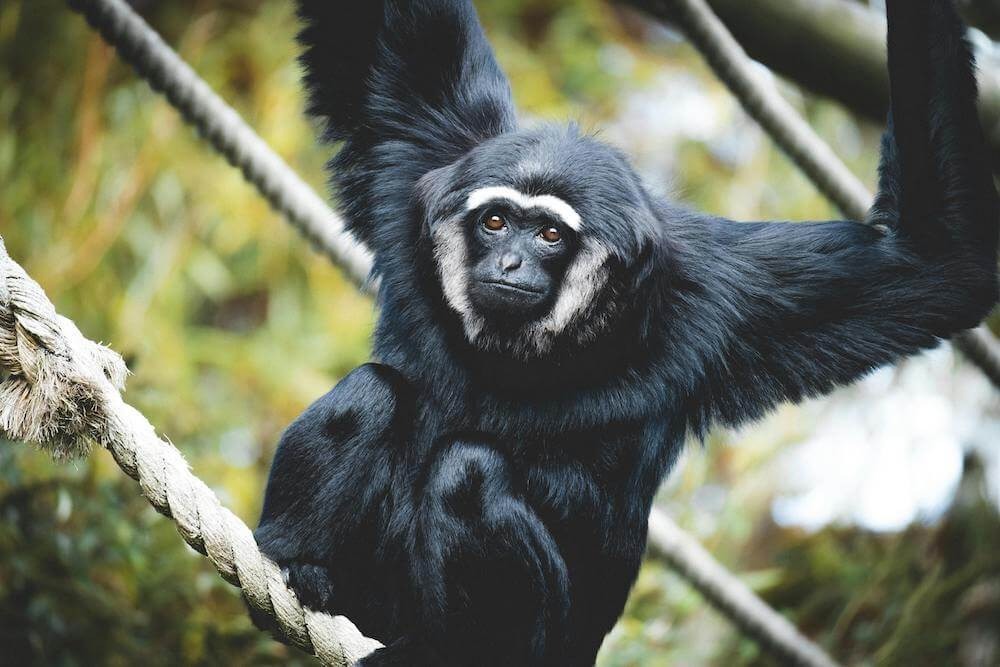
The Pileated gibbon is instantly recognizable by the bold cap of dark fur on its head, which gives the species its name. Like the White-handed gibbon, it spends most of its time in trees and can easily fly through the forest, swinging from branch to branch. Its diet consists mainly of fruit.
Like the White-handed gibbon, Pileated gibbons are also known for their powerful and loud vocalizations, decorating Thai forests with their melodic calls. Reclusive in nature, you are also more likely to hear a Pileated gibbon before seeing one. However, they can still be spotted in national parks and protected forests.
Where to spot monkeys in Thailand
National parks and rainforests
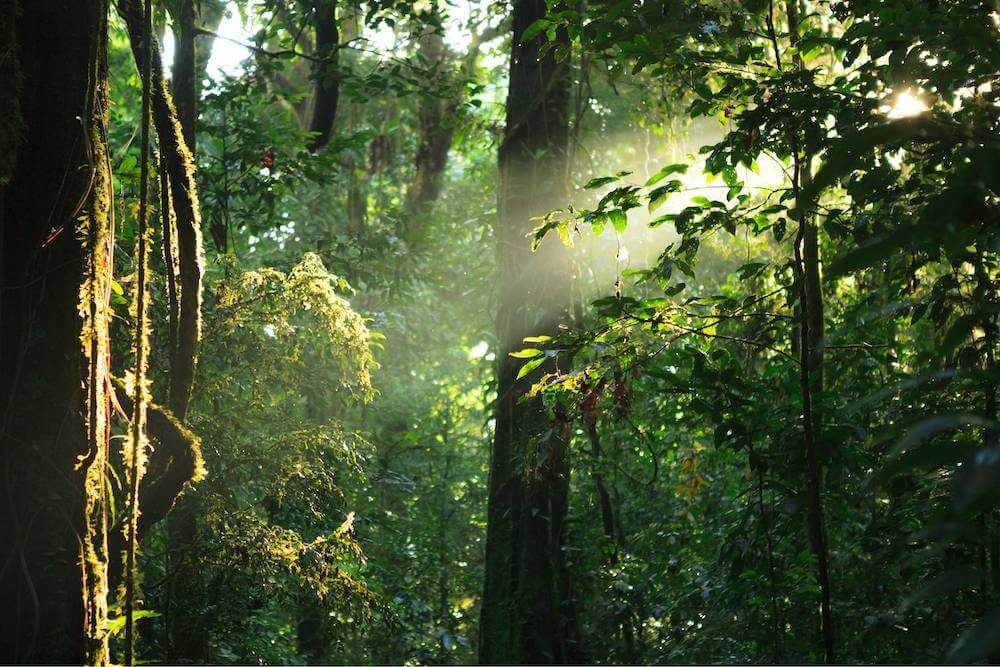
Thailand’s national parks and rainforests are some of the best places to observe monkeys in Thailand. Here you will have a chance of spotting many different types of monkeys (and apes), from cheeky macaques to shy langurs and singing gibbons.
Monkeys are most active in the early morning and late afternoon, making this the best time to make a trip to see them.
Some of Thailand’s best national parks for primate sightings include Khao Yai National Park, Kaeng Krachan National Park, Khao Sok National Park, and Huai Kha Khaeng Wildlife Sanctuary. These areas are home to multiple species and offer well-maintained trails for wildlife observation. They are also protected areas and sanctuaries that prioritize the safety and conservation of these primates.
Beaches and coastal areas
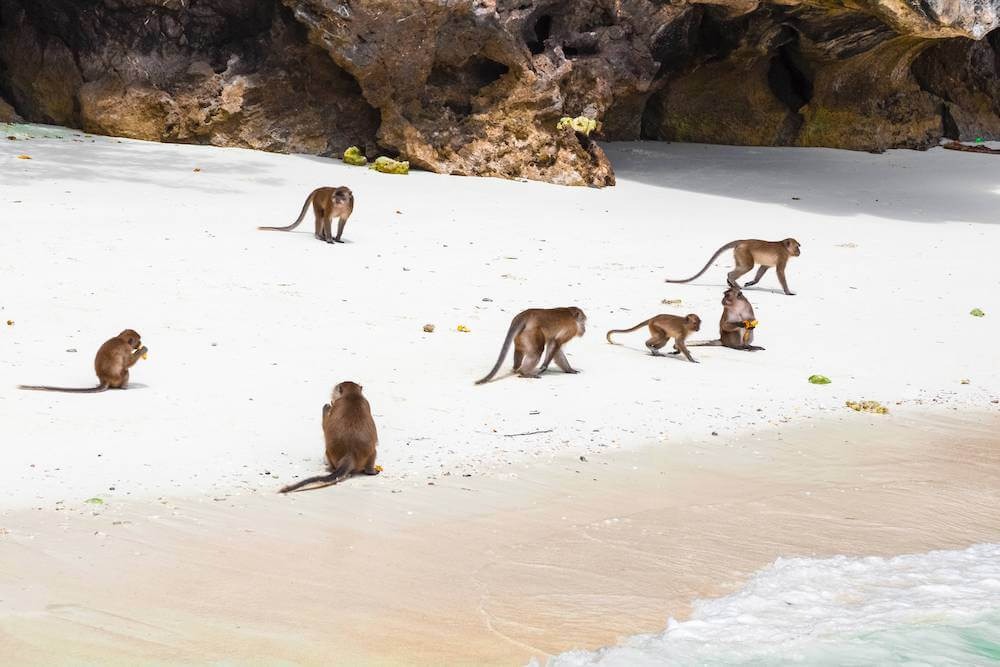
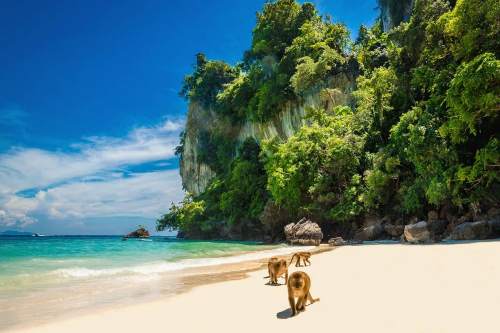
Thailand’s coastlines and islands are also one of the places you are likely to find monkeys in Thailand. Long-tailed macaques are the species most commonly seen along the coast, where you might see them searching for fruit, shellfish, and crabs.
Popular coastal locations for monkey sightings include Railay Beach (Krabi), Ao Nang, Phi Phi Islands, Monkey Beach, and parts of Koh Lanta and Koh Chang.
Urban and temples areas
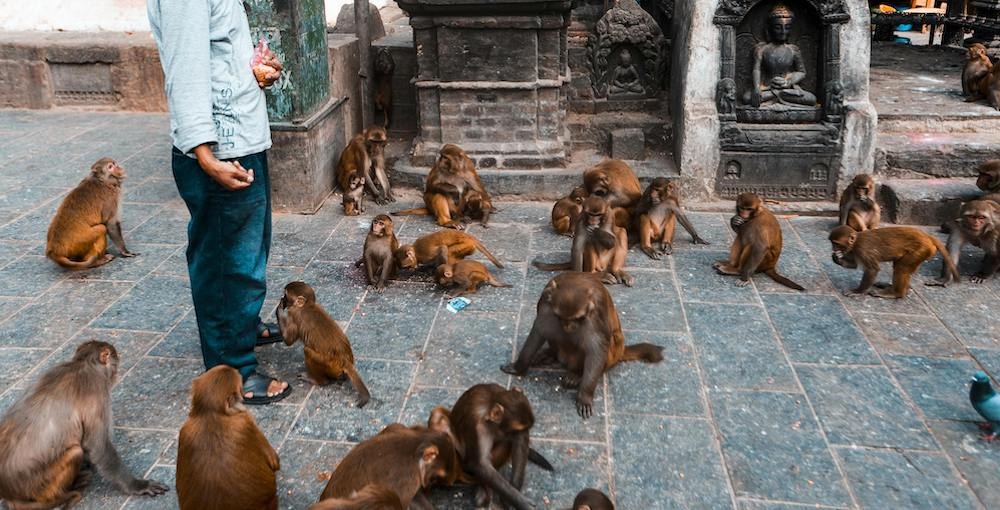
Monkeys in Thailand are not limited to forests and beaches, they are also a common sight in urban areas and temple grounds. Long-tailed macaques, in particular, have adapted to living close to humans and can often be seen climbing walls, exploring streets, or even resting near shrines and temple courtyards.
Temples such as Wat Phra Prang Sam Yot (Lopburi), Wat Khao Takiab (Hua Hin), and Monkey Temple (Koh Samui) are famous for their resident monkey populations. Early morning or late afternoon is often the best time to watch these primates.
Monkeys in Thai culture and religion
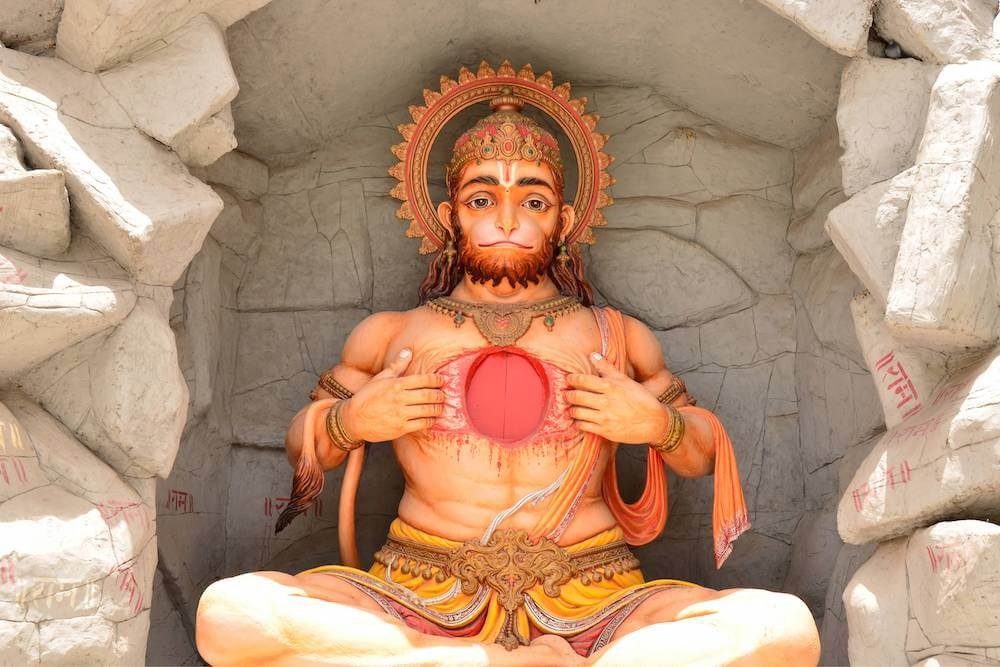
Monkeys play a significant role in Thai culture and religion, typically associated with Buddhism and Hinduism. The monkey god Hanuman has been central to Thai culture and has been revered in Thai art, literature, dance and temples for thousands of years. Hanuman is the god of bravery, loyalty, devotion, and self-discipline. He is celebrated across different festivals and religious ceremonies, with devotees praying to Hanuman for strength and protection.
Monkeys are often present in many temple grounds, some of which make these temples their home. These monkeys are not seen as invasive, but rather, a central part of the temple ecosystem. They are often treated with respect and sometimes even with reverence, seen as guardians of the temple grounds or as sacred companions.
The Monkey festival in Lopburi
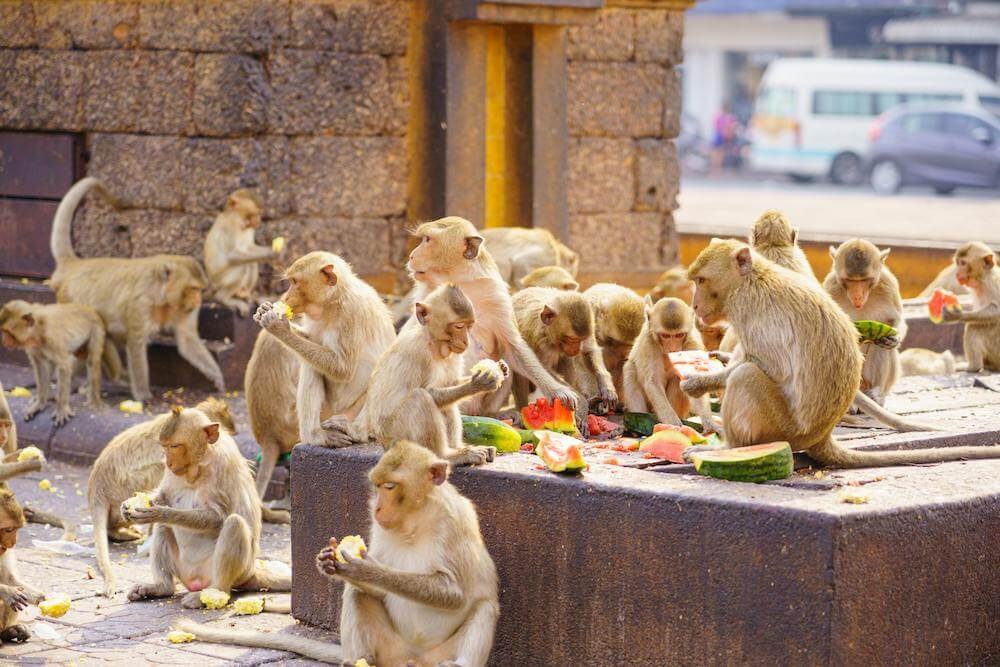
The Monkey festival in Lopburi is a yearly event held in honor and celebration of the city’s large monkey population. Celebrated on the last Sunday of November, the festival is held in Phra Prang Sam Yot temple. The festival starts with an opening dance ceremony with performers in monkey costumes and continues with a large feast as an offering for the city’s beloved monkeys, with tables, banquets, and pyramids of all kinds of fruits offered. Macaques can be seen jumping from table to table, indulging in their celebration. It is surely a sight to see!
What to do when you encounter monkeys in Thailand
At Royal Vacation, we regularly receive questions from travellers surprised by how common monkeys are in Thailand — especially in urban and temple areas. One of the most frequent issues we see is visitors underestimating how quickly monkeys can grab food or personal items, particularly in places like Lopburi, Railay Beach, or popular temple grounds. In our experience, travellers who follow simple rules — avoiding eye contact, keeping bags zipped, and not carrying food openly — enjoy these encounters without issues. Monkeys can be entertaining and fun to watch, but it is important to know what to do if or when you encounter them. Understanding monkey behavior before visiting makes a big difference in having a safe and enjoyable experience. Here is a quick and easy guide on the “dos and don’ts”.
Keep your distance
While you might feel tempted to get close and interact closely with monkeys, you must observe them from a safe distance. Although attacks are uncommon, certain monkeys may feel threatened if you get too close, and they will not shy away from biting or scratching.
Secure your belongings
Monkeys may try to snatch items close by, such as bags or food. Keep your items close and out of reach.
Respect local rules
Follow any park or temple guidelines regarding wildlife. Many protected areas have specific rules to keep both visitors and monkeys safe.
Stay calm
This is an important one. If you get scared and scream or run away, this could potentially trigger a monkey’s predatory instincts. Stay calm, and they will too.
DO NOT Feed them
While tempting, feeding monkeys can make them dependent on humans and may lead to aggressive behavior.
Do not Smile or make direct eye contact
Monkeys may view smiling (showing teeth) and direct eye contact as a challenge.
Overall, dealing with monkeys in Thailand is pretty straightforward. Just avoid direct interaction, stay calm, and observe from a distance.
Monkey shows and unethical wildlife tourism
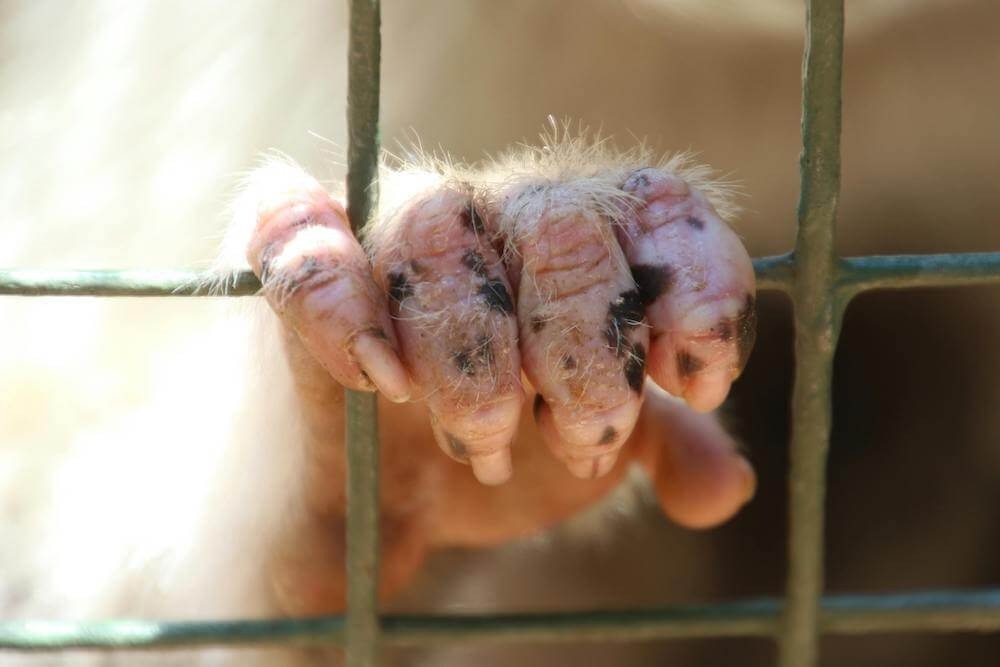
Unfortunately, human exploitation is no small issue for monkeys in Thailand. Tourism plays a large role in the mistreatment of monkeys, as they are used to perform monkey shows, performances, and photo opportunities that involve handling (often violently), dressing, and training monkeys for entertainment purposes. These practices rely on fear and physical punishment as a form of control.
To support ethical and responsible tourism:
- Avoid visiting any attractions that stage monkey performances.
- Visit national parks, protected forests, or reputable wildlife sanctuaries where monkeys belong to their natural environment.
- Never touch or feed monkeys in urban or tourist areas unless it’s part of a licensed sanctuary or ethical program.
When fewer people go to these shows and thus no longer indirectly participate in the exploitation of these primates, this decreases demand for such activities, helping encourage ethical, conservation-led wildlife and tourism instead.
In conclusion, monkeys play an important role within the Thai tourist landscape, from beaches and forests to temples and city streets, it is likely that you will encounter them on your trip there. Remember to stay calm and avoid direct interaction with them, and you will be more than fine. Hopefully, this guide has given you everything you need to know about monkeys in Thailand, from where to spot them to how to behave around them, and even how to tell the difference between a Dusky langur and a Phayre’s langur!