



Bangkok is home to over 400 Buddhist temples (wats), making it one of the best cities in the world for cultural and spiritual sightseeing. In this guide, we highlight the best temples in Bangkok, including iconic landmarks such as the Grand Palace and Wat Arun, as well as hidden temples that offer quieter and more meditative experiences for travelers. We also share essential visitor tips, including how to dress properly, how to behave respectfully inside temples, and the best times of day to visit for the most enjoyable and authentic experiences.
The 7 most iconic Bangkok temples
The Grand Palace and The Temple of Emerald Buddha (Wat Phra Kaew)
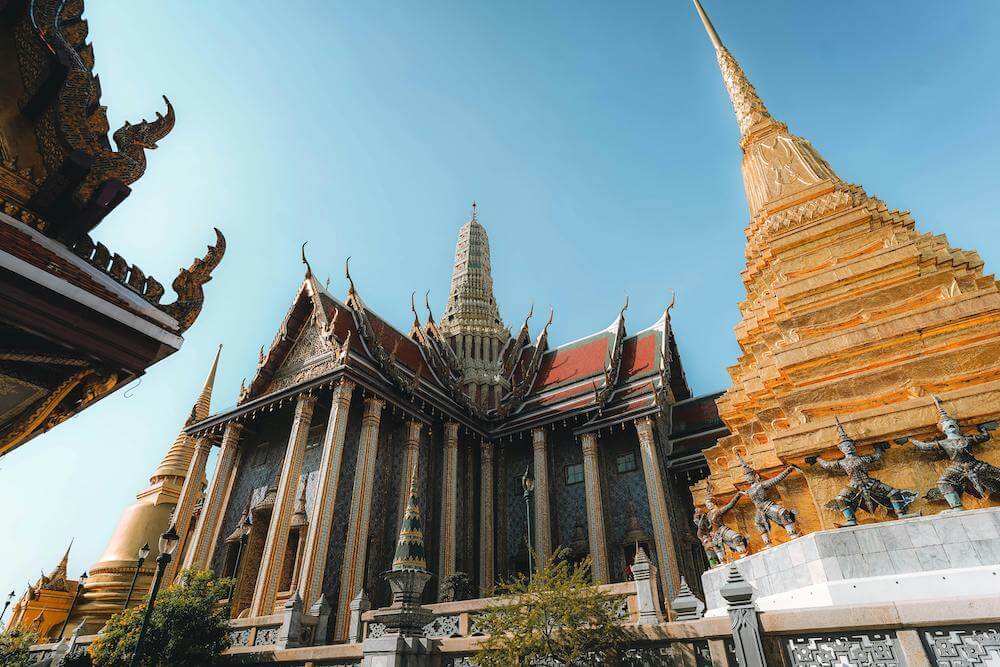
Wat Phra Kaew, or the temple of the emerald Buddha, is Thailand’s most sacred and valued temple. The temple is located in the Grand Palace, which is an attraction of its own. The Grand Palace houses the Emerald Buddha, a statue that is not made of emerald but a single block of jade.
The temple was built in 1782, the same year Bangkok became the capital, and it has since been closely tied to the Thai monarchy. Certain ceremonies can only be performed by royalty here. The temple has also played a role in important historical events, including coronations and other state rituals.
Based on our experience, we recommend visiting the Grand Palace early in the morning, as it gets busier from 9AM onwards.
Opening hours: 8:30AM – 4:30PM
Entrance fee: THB 500
Location: Bangkok
Wat Pho – The Temple of The Reclining Buddha
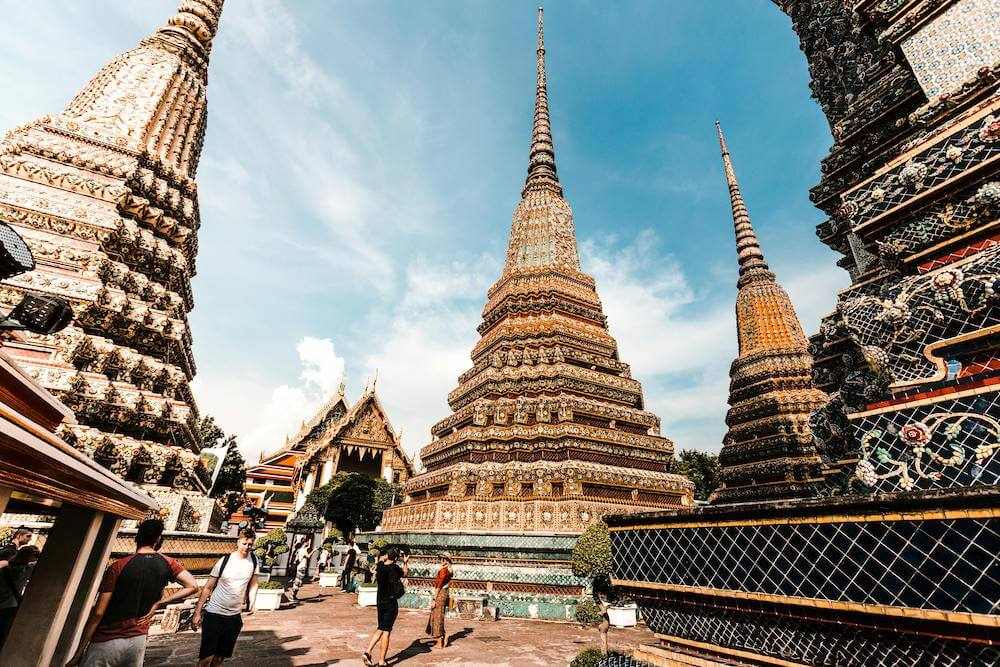
Wat Pho, or the temple of the reclining Buddha, is locally known as Wat Phra Chetuphon Wimon Mangkhalaram Rajwaramahawihan.
Wat Pho is one of Thailand’s oldest and largest temples, dating back to the 16th century. The temple is known for its massive reclining Buddha, which measures 46 meters long and is covered in gold leaf. Some murals and inscriptions in the temple include ancient medical texts, covering topics like herbal remedies and massage techniques.
Wat Pho in Bangkok is home to Thailand’s first university of traditional medicine, the Wat Pho Thai Traditional Medical and Massage School, famous for authentic Thai massage, offering professional training and massages from students in a historic temple complex where traditional healing knowledge is preserved, making it a key site for both learning and experiencing genuine Thai massage.
Many tourists skip the massage service when visiting Wat Pho, but we recommend trying it – it’s an opportunity to connect with centuries-old, traditional Thai practices in a truly remarkable and historic setting.
Opening hours: 8:00 AM – 7:30 PM
Entrance fee: THB 300
Location: Phra Nakhon, Bangkok (a 10-minute walk away from the Grand Palace!)
Wat Saket – The Golden Mountain
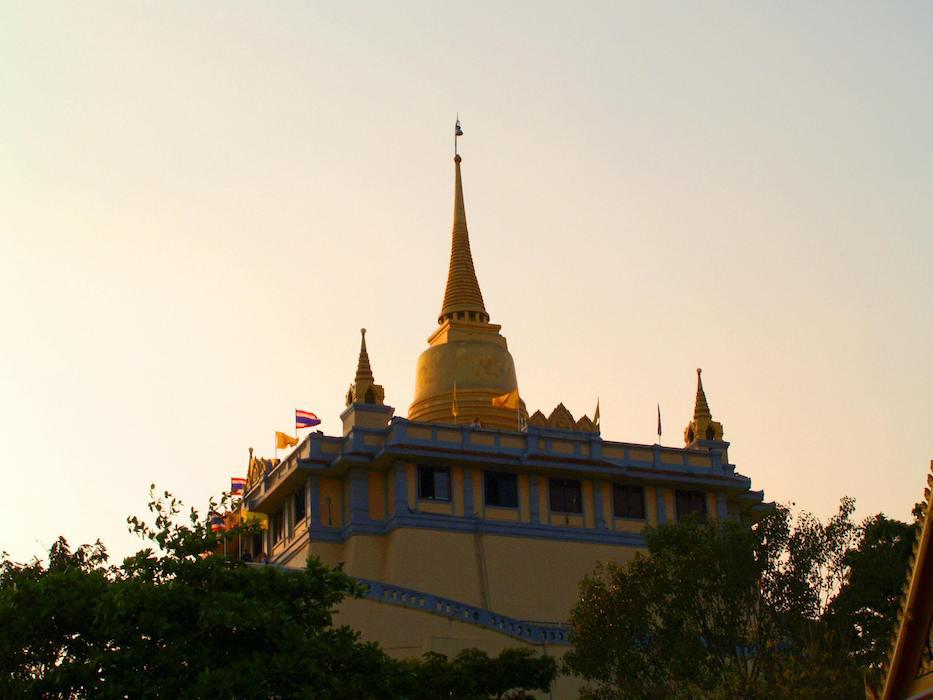
Wat Saket, or Wat Phu Khao Tong as it is known amongst Thai locals, is also referred to as the Golden Mountain. It was built over 700 years ago during the Ayutthaya period, where it was later moved and expanded to Bangkok when it became the capital.
One of the things that makes visiting Wat Saket special is the climb to the top of Golden Mount, where you will get incredible views over Bangkok, especially at sunset. In our experience, Wat Saket offers a calmer, quieter experience compared to Bangkok’s busier temples, making it ideal for those looking for a quieter spot to visit.
Wat Saket is a very significant site for the Loy Krathong Festival, also known as the Festival of Lights. Wat Saket hosts a traditional seven-day and seven-night celebration. The festival takes place on the full moon of the 12th lunar month, usually falling in November, when the temple becomes filled with lanterns and prayer ceremonies.
Opening hours: 7AM – 7PM
Entrance fee: THB 100
Location: Bangkok
Wat Arun – The Temple of Dawn
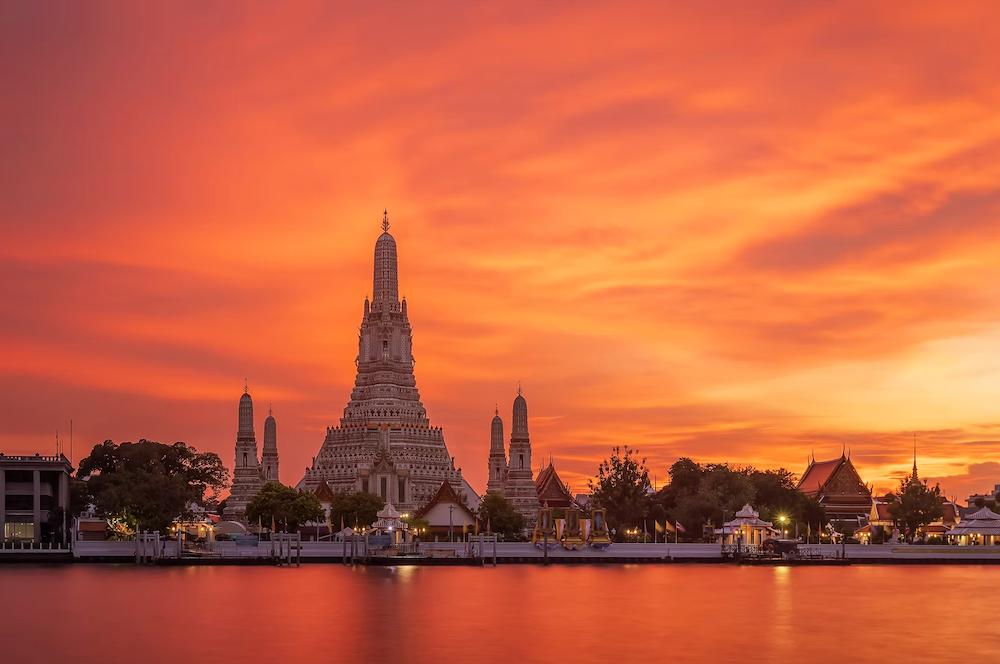
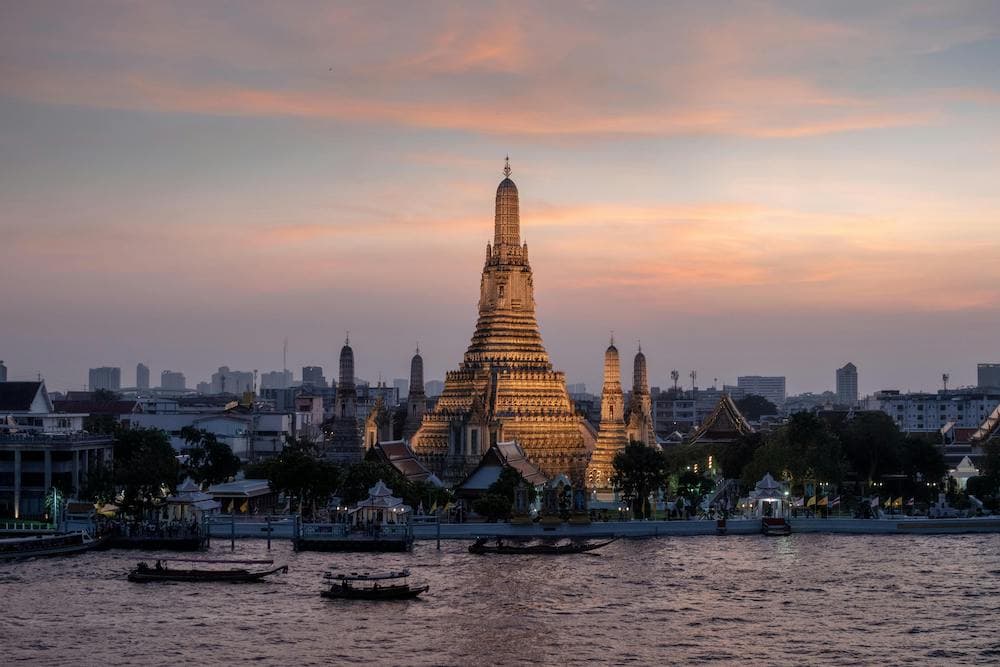
Wat Arun, also known as the Temple of Dawn, and locally referred to as Wat Chaeng, is one of Bangkok’s most recognisable and significant landmarks. The temple derives its name from the Hindu god Aruna, the embodiment of the rising sun.
In Bangkok, Wat Arun is considered to be a symbol of new beginnings. Originally built during the Ayutthaya period, Wat Arun was moved to Bangkok when it was made the capital, reflecting Thailand’s transition from one era to another. The temple stands out from other temples in Bangkok, as its architecture is of traditional Khmer-style design. The central prang (tower) is around 70 meters tall and is decorated with colorful porcelain and seashells, which glow and illuminate in the sun. Wat Arun also used to house the Emerald Buddha before it was relocated to the Grand Palace.
Wat Arun sits on the Chao Phraya River, offering stunning riverside views that we recommend seeing during sunset.
Opening Hours: 8:00AM – 5:30PM
Entrance fee: THB 200
Location: Bangkok
Wat Traimit – The Temple of The Golden Buddha
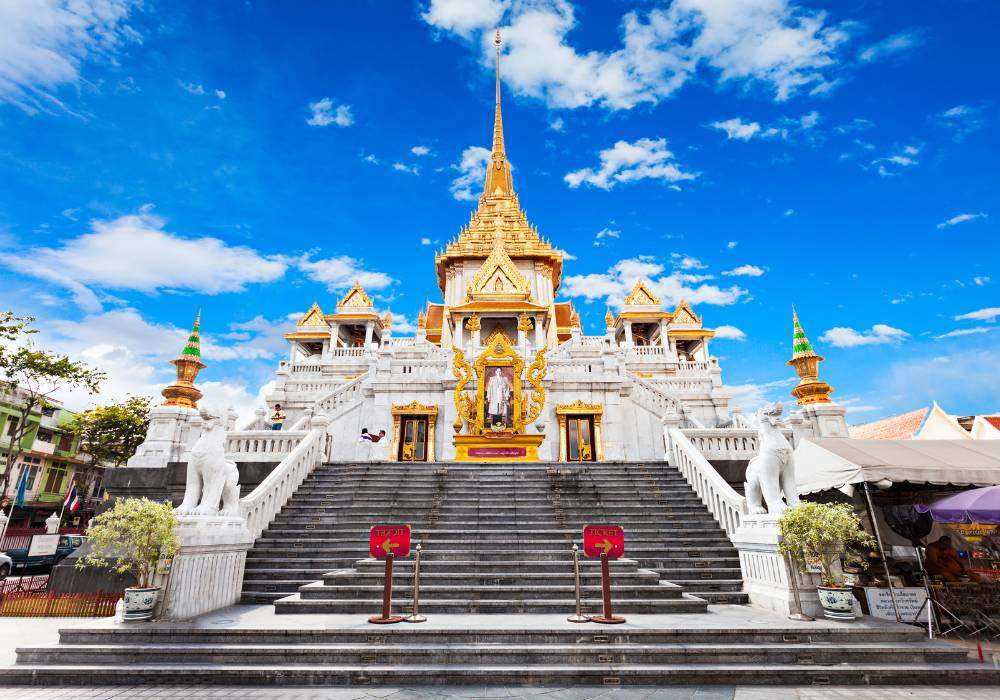
Wat Traimat, or the temple of the golden Buddha, also known locally as Phra Phuttha Maha Suwan Patimakon, houses the world’s largest solid gold Buddha statue, known as the Golden Buddha. The statue weighs approximately 5.5 tons and stands 3 meters tall, and is made entirely of gold, making it worth millions of dollars in today’s gold prices.
Although the statue is centuries old, originally crafted in the 13th-14th century, the golden Buddha was only discovered in the 1950s, where, until then, it was discreetly hidden and disguised in plaster. The statue was unveiled by accident, and since then, it has been a highly revered icon in Thailand.
Wat Traimit is located on Yaowarat Road in Bangkok’s Chinatown district, making this temple an easy visit for those exploring the area. The temple is considered modest in comparison to some others on this list, but it is still a highly popular area for travellers to visit, and the Golden Buddha alone makes it worth a visit.
Opening Hours: 8:00AM – 5:30PM
Entrance fee: THB 100 for museum entrance + THB 40 to view the golden Buddha.
Location: Bangkok (near the entrance to Chinatown/Yaowarat)
Wat Benchamabophit – The Marble Temple
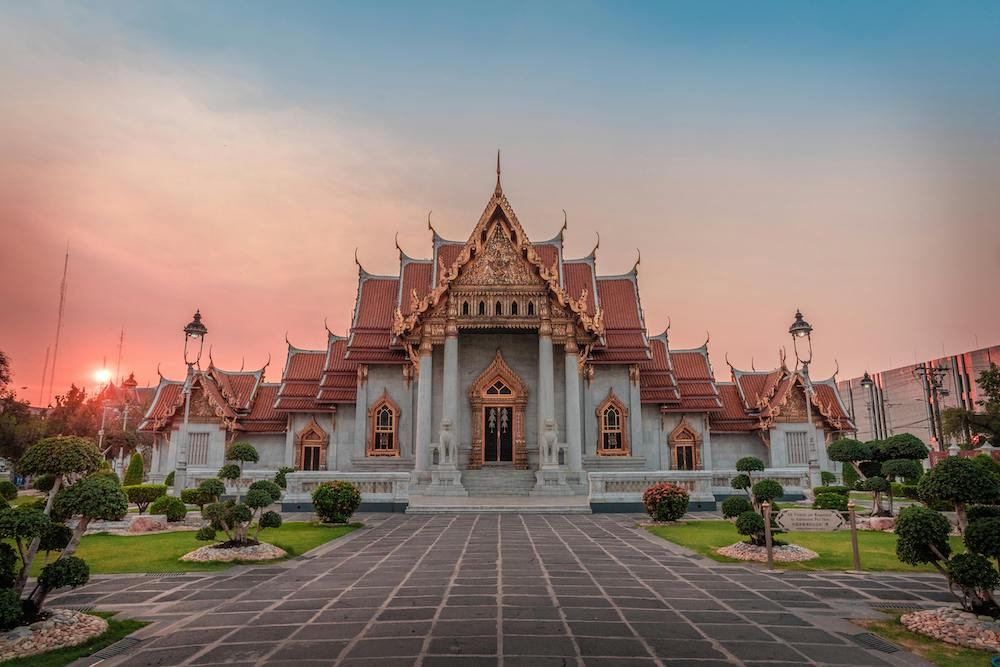
Built in true traditional Thai architectural style, Wat Benchamabophit or The Marble temple, is built entirely of marble. The marble used was imported from Carrara, Italy. The temple also features a collection of over 50 Buddha statues, all of them in a different pose and many in different Asian art styles (Sukhothai, Lopbur, Chinese, Khmer, etc).
Quieter than many of Bangkok’s central temples, Wat Benchamabophit is ideal for peaceful visits, photography, and those looking for a more reflective experience.
Opening Hours: 8:00 AM – 5:00 PM
Entrance Fee: THB 50
Location: 69 Rama V Rd, Dusit, Dusit District
Wat Ratchanatdaram – The Metal Palace
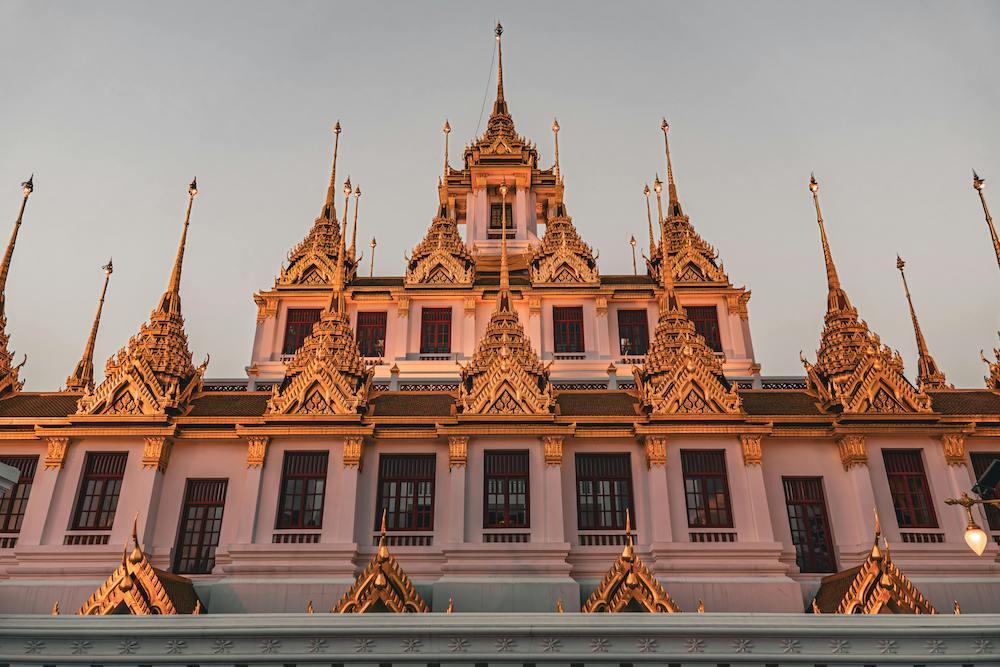
Wat Ratchanatdaram, or The Metal Palace, is also known locally as Loha Prasat, meaning the iron palace. Built in 1846, the temple consists of 37 metal spires, representing the 37 virtues toward enlightenment in Buddhist teachings. It is one of the only temples in the world built in the style of ancient metal temples, originally from India and Sri Lanka; now it stands as an important symbol of Buddhist architecture, which preserves ancient architecture.
Wat Ratchanatdaram is a lot less crowded than other popular temples in Bangkok, making it the perfect place for a more spiritual, meditative atmosphere.
Opening hours: 8:00AM – 5:00PM
Donation: A small donation (around THB 20) is suggested.
Location: 2 Maha Chai Road, Phra Nakhon District
(A short walk away from Wat Saket!)
What are the best temples in Bangkok?
For first-time visitors, we recommend visiting at least the Grand Palace (Wat Phra Kaew), Wat Pho, and Wat Arun. If you have more time, you can add more temples from the list mentioned above or check out some hidden gems mentioned below.
Secret temples of Bangkok
If you are looking for less crowded temples in Bangkok that are still worth visiting, we recommend the following:
Giant Buddha (Wat Intharawihan)
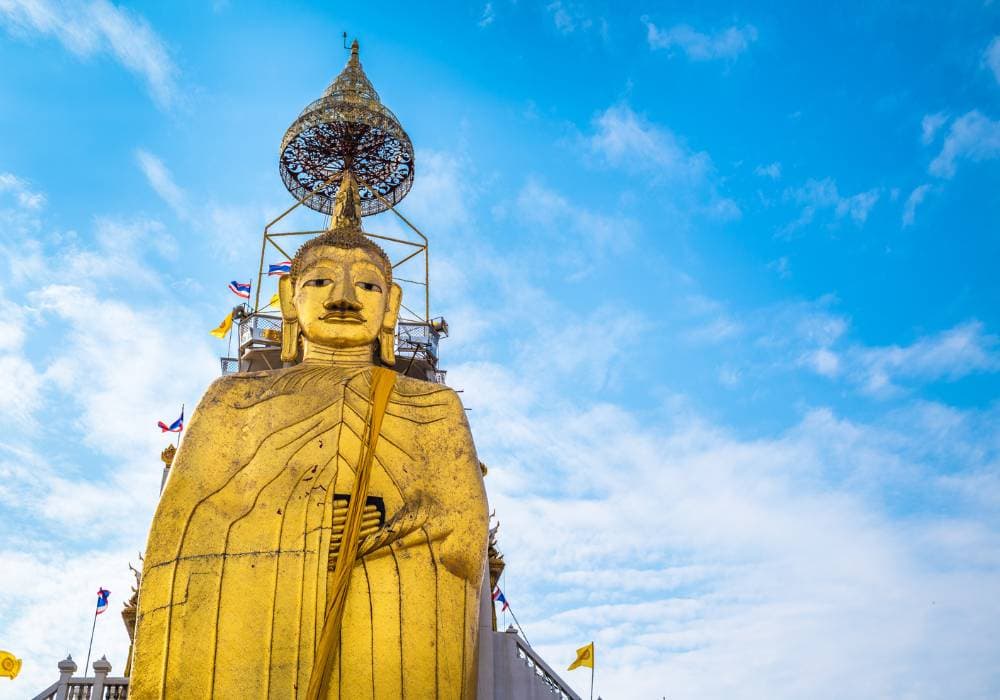
Wat Intharawihan, or the Giant Buddha, is famous for its enormous 32-meter (or 104-foot) tall standing Buddha statue, known locally as Luang Pho To. Construction of the statue began in 1867 and was completed in 1927, taking 60 years to finish. The statue is highly revered by locals, and worshippers often offer flowers, incense, and gold leaf. Visitors can climb near the statue’s feet for a closer view of the Buddha’s face and hands.
Opening hours: 8:30AM – 8PM
Entrance fee: Free
Location: 144 Wisut Kasat Road, Bang Khun Phrom, Phra Nakhon
Wat Paknam Bhasicharoen – The Big Buddha
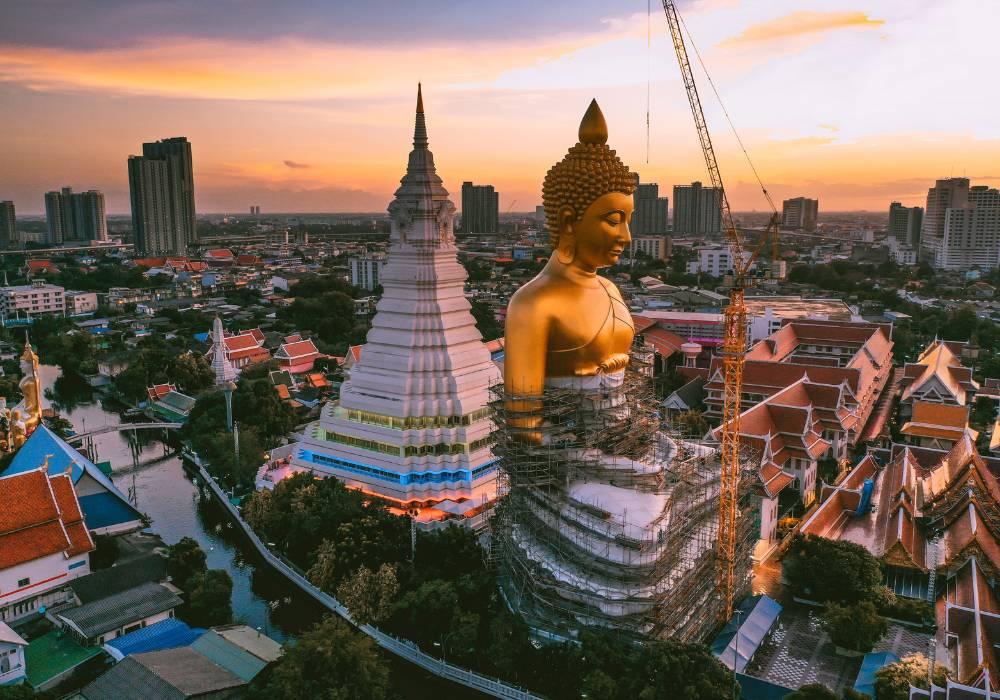
Wat Paknam Bhasicharoen, or The Big Buddha is known for its seated Buddha statue that stands about 69 meters (or 226 feet) tall. The temple is located by the Chao Phraya River and the statue can be seen from many parts of the city. The temple was originally founded in the early 19th century and has long been an important center for Buddhist study and meditation. One of the best ways to view this temple and the giant Buddha is through a canal tour on a long-tail boat.
Opening hours: 8AM – 6PM
Entrance fee: Free
Location: Phasi Charoen, near Bangkok
Wat Asokaram
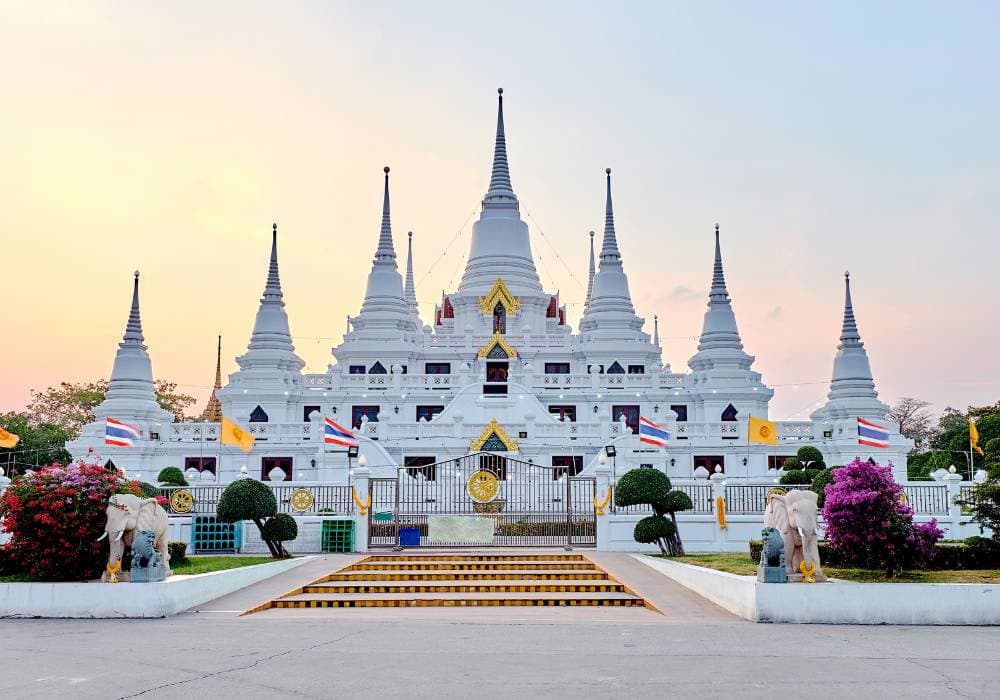
Wat Asokaram is located in Samut Prakan, around 6km away from central Bangkok. It is known for its Vipassana (Insight) meditation retreats and it is one of the most respected meditation centers in Thailand. The name Asokaram comes from two Pali words, “Asoka”, meaning “without sorrow,” and “Arama”, meaning “park” or “garden.” Together, the name can be understood as “a peaceful/joyful place free from sorrow”.
The temple is calm and quiet, surrounded by forest greenery, with a relaxed atmosphere that makes it feel like a retreat from the busy city, making it feel distinctly different from Bangkok’s busier temples. Wat Asokaram is often visited by locals for meditation and religious practice and is a good option for travellers looking for a peaceful, less touristy temple to visit or a place focused on meditative practice.
Opening hours: 8AM – 4:30PM
Entrance fee: Free
Location: Samut Prakan (near Bangkok)
Wat Samphran – Dragon Temple
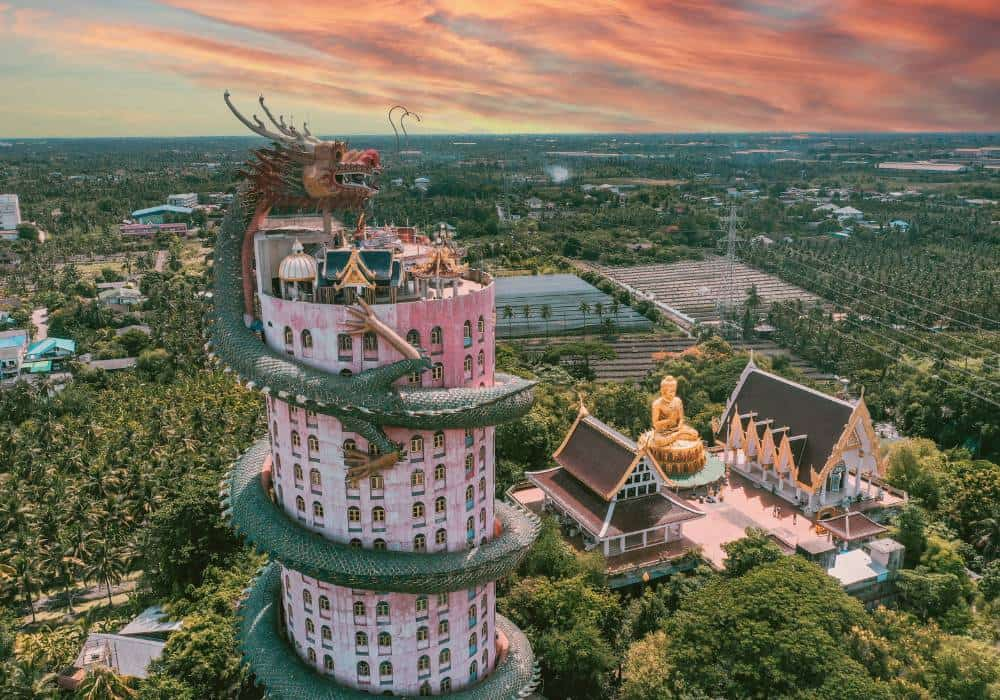
Wat Samphran, also known as the Dragon Temple, is located in Nakhon Pathom, about 40km west of Bangkok. The temple is known for its 17-story (80-meter) pink tower wrapped by a giant dragon sculpture that coils around the building. Built in 1985, the dragon represents strength and power in Buddhist symbolism, and visitors can climb its spiraling staircase to reach the upper levels. It is easy to reach from Bangkok and is a popular spot for visitors looking for something different from the city’s usual temples.
Opening hours: 7AM – 6PM
Entrance fee: free (although donations are encouraged)
Location: 9Nakhon Pathom (near Bangkok)
Important things to know before visiting Bangkok temples
- Dress modestly
In a temple you are expected to dress modestly and failing to do so will be considered offensive and disrespectful. Make sure to cover your shoulders, chest, and knees. Do not wear anything revealing and avoid tight clothing. Do not enter wearing sportswear or beachwear. - Shoes off
Always remove shoes before entering temple buildings, prayer halls, and any sacred areas. - Be quiet & respectful
Temples are places of worship, and it is important to be quiet and respectful at all times. Keep your voice low, phones silent, don’t disrupt worshippers or meditation, and avoid public displays of affection and loud behavior. Remember to keep in mind that all temples and images of Buddha are considered sacred. - Respect monks
Do not touch monks or their robes, and women need to be extra mindful of this, even accidental touch is considered disrespectful. Do not pass objects directly to a monk if you are female, either pass the object through a male or place it on the ground for the monk to pick up. - Mind your body language
Place your hands together in a prayer-like gesture (wai) when greeting monks or showing respect to Buddha images. Never point your feet in the direction of Buddha images or monks. Don’t turn your back on a Buddha image, as it is considered disrespectful. Don’t sit on platforms reserved for monks or walk in front of people praying. Don’t step or stand on the door threshold when entering a temple. - Photography etiquette
Always check for signs that permit or prohibit photography, or ask for permission before taking photos. Avoid using flash in indoor prayer areas, and never photograph monks without permission. - Offerings & donations
Donations are not expected, but they are appreciated. Donations can include money, flowers, incense, or candles as a sign of respect. - Time awareness
Keep in mind the temple’s opening and closing times. Most temples open early in the morning and close by late afternoon.
Whether you’re visiting Bangkok for the first time or returning to explore deeper cultural experiences, these temples offer an unforgettable insight into Thailand’s history and spirituality. If you’d like help planning a personalized Bangkok temple itinerary, our local travel specialists are happy to assist.